Oh Poi Market
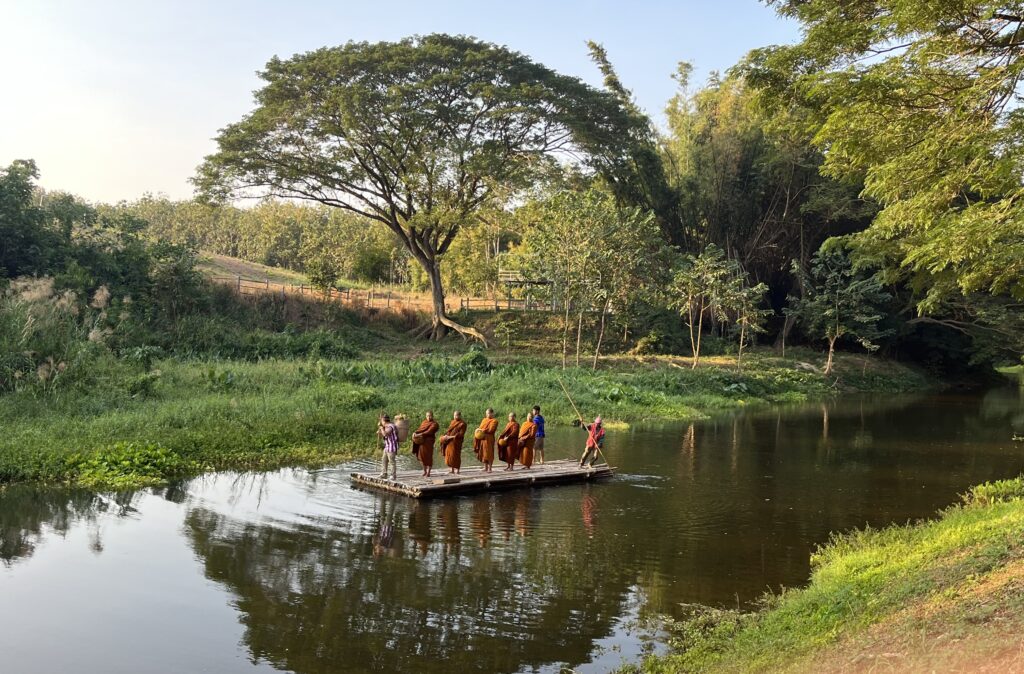
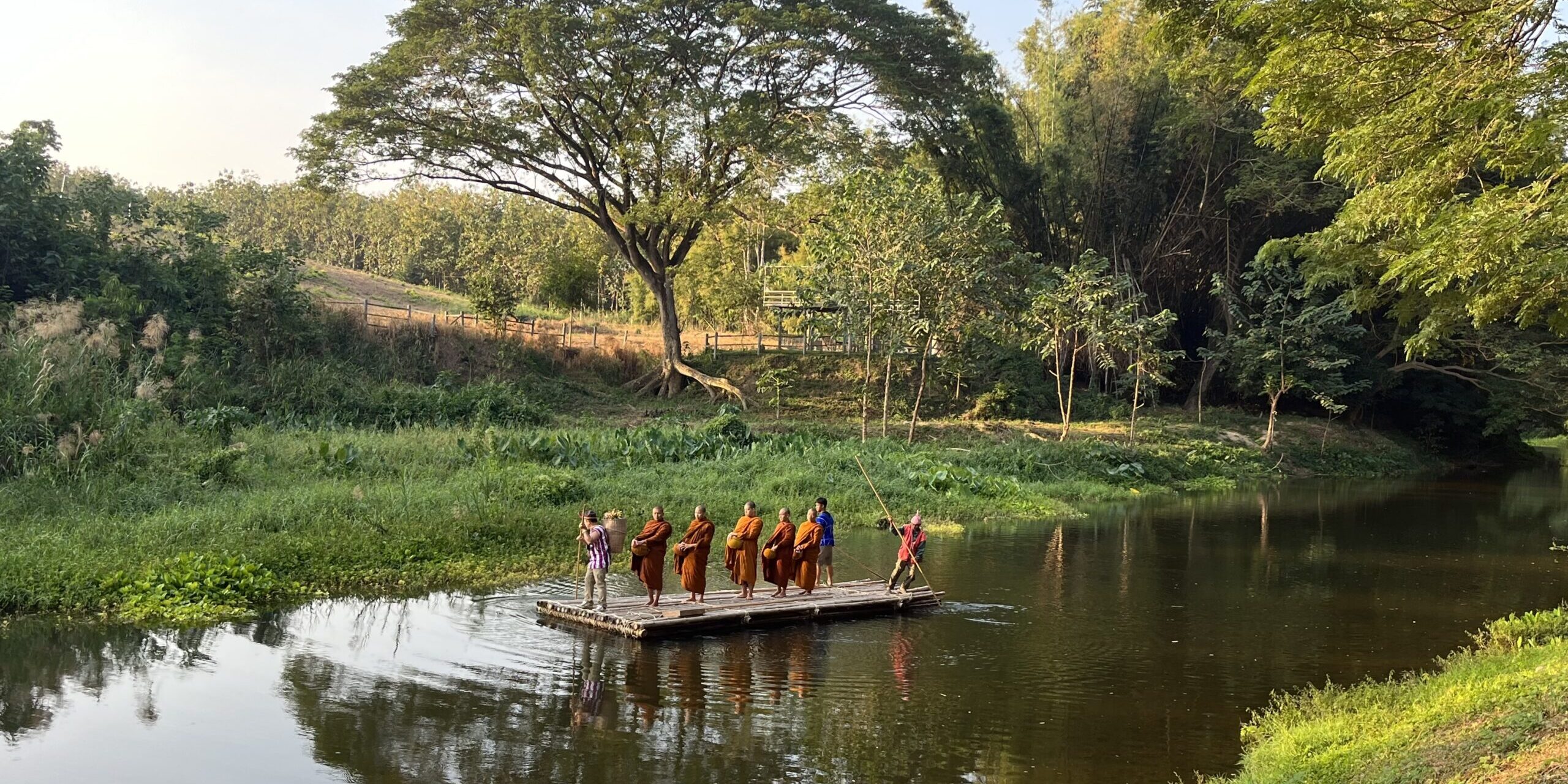
Through the pre-dawn mist, a horn sounds. The man blowing it is perched at the front of a bamboo raft and standing behind him are five monks, their saffron robes contrasting with the verdant riverbank.
The monks stand serenely as the raft gently drifts downriver, the first slivers of sunlight peering through the mountains beyond.
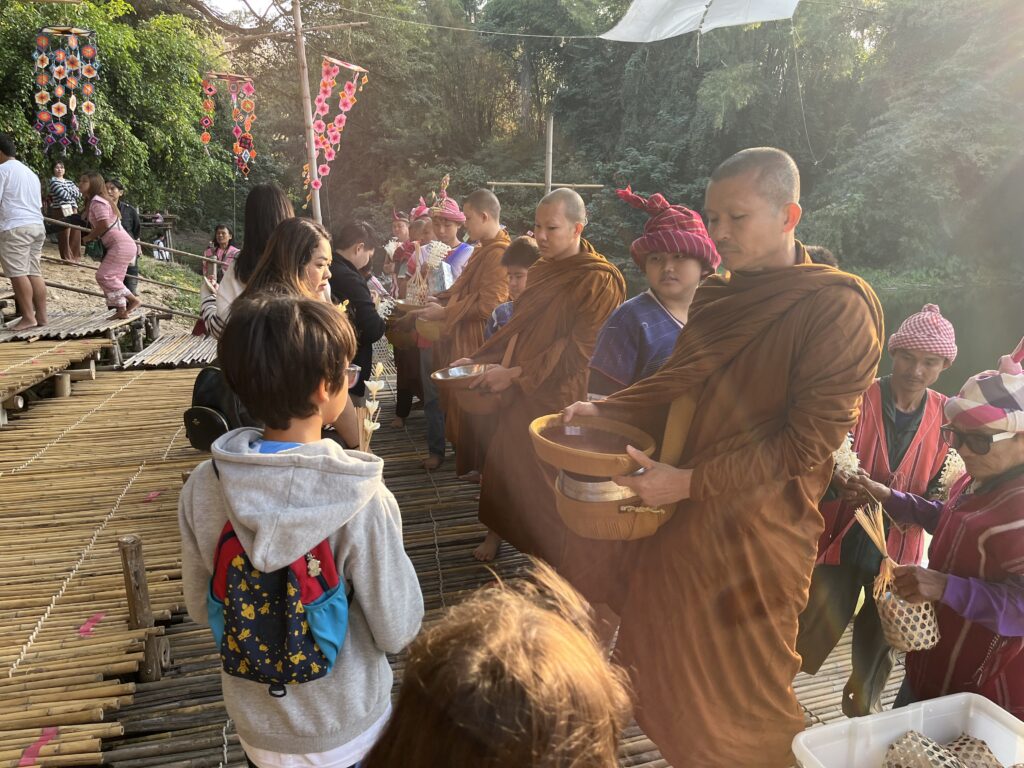
The raft comes to rest at a wooden pier, where worshippers queue to offer alms. It’s easy to imagine how this ancient tradition has taken place for centuries. But you’d be wrong.
This initiative was launched just six years ago and has turned into a wonderful example of how culture and tourism can be successfully merged.
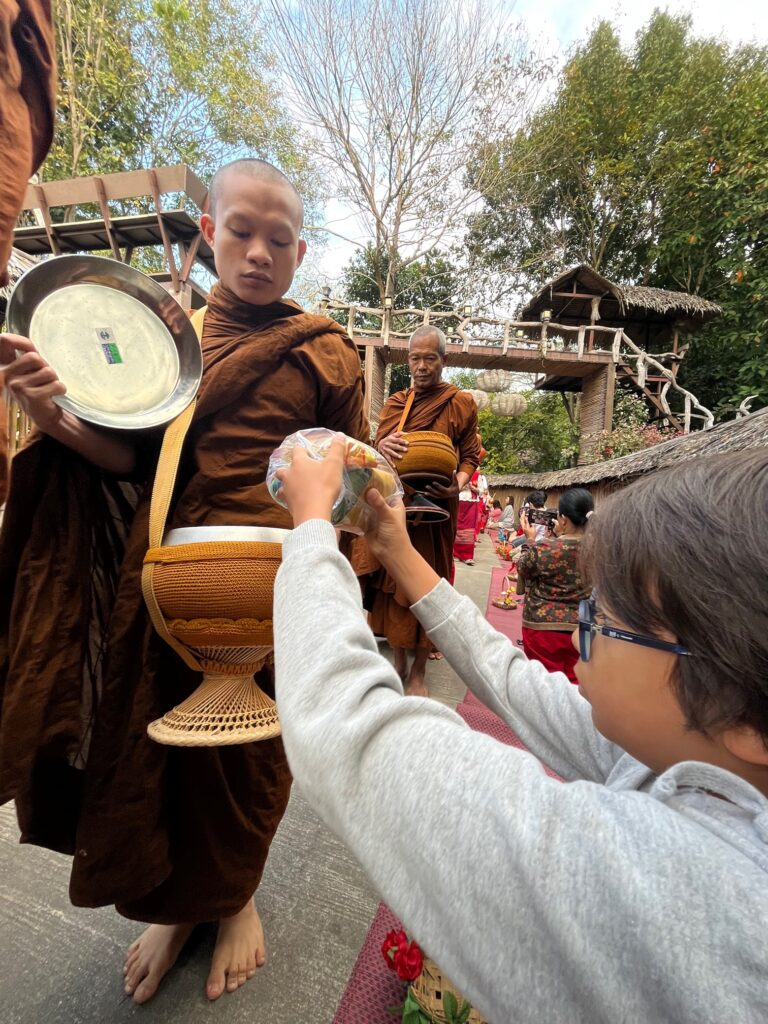
Every weekend, visitors head to Oh Poi Market in the Suan Phueng district of Ratchaburi to make merit. We arrive by 7am and it’s already packed. Offerings, costing 40THB, are neatly packed together. When the raft arrives, we file down one side of the pier, make our offerings, and exit via the other side.
Monks on a raft at Oh Poi Market, Ratchaburi.
The monks have soon left for the temple across the road, but the market itself is worth staying for. Oh Poi Market (‘oh poi’ means rest in the local dialect) is run by the Karen, who are the largest ethnic group in Thailand. The market is remarkable for having a real focus on sustainability. Many Thai markets are littered with plastic. Drinks usually come in plastic cups that come with a plastic straw and plastic bag. Even bananas come wrapped in plastic (if only bananas had their own natural wrapping…)
But here things are different. We try the pork and sticky rice, wrapped in a banana leaf that’s pinned together with wooden sticks, and khanom thuai (jelly-like desserts made from coconut milk, sugar and rice flour), served on recyclable paper plates. When we’re finished, there’s a recycling area to place specific materials. It’s so impressive someone even wrote an academic paper about it.
As well as food, the market has a good selection of largely locally-made textiles, toys and soaps. The market, which only opens at weekends, is a refreshing example of how culture and commercial interests can work alongside each other.
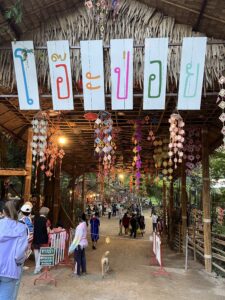
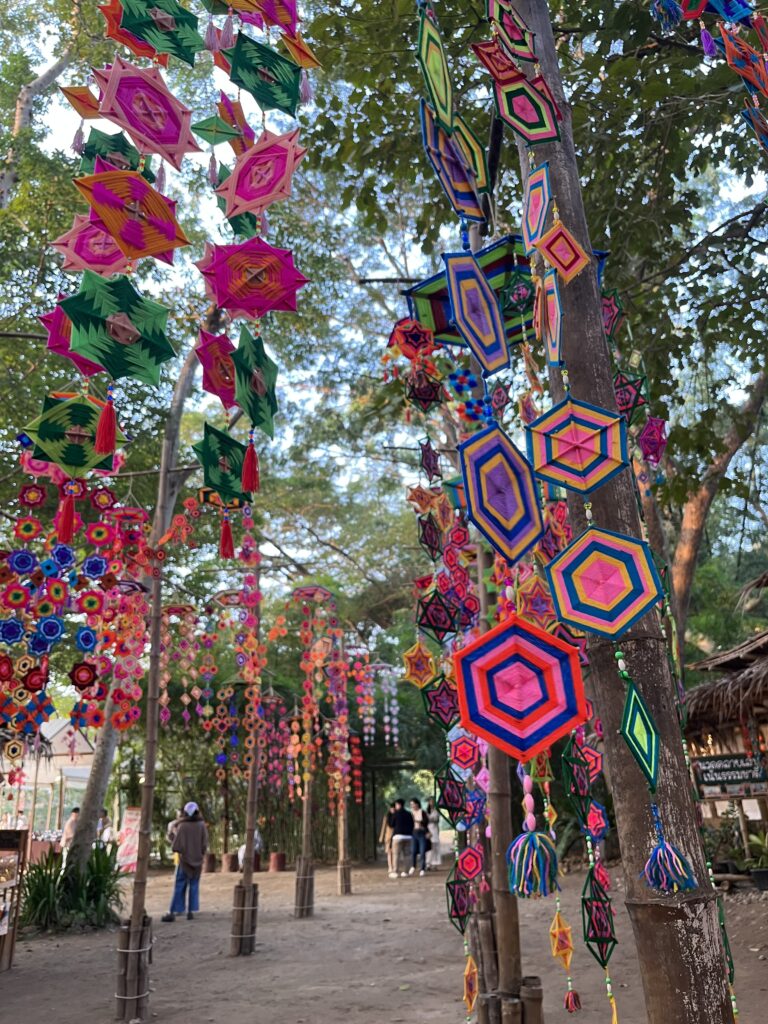
Oh Poi Market entrance, Ratchaburi
Huai Nam Sai Market
Another morning market worth a look sits slightly farther west, less than 10km from the border with Myanmar. Huai Nam Sai (meaning ‘clear stream’) weekend market takes place along one narrow, meandering street. Arrive by 8am and you can buy your offerings (40THB) and take your place along a long row of red mats.
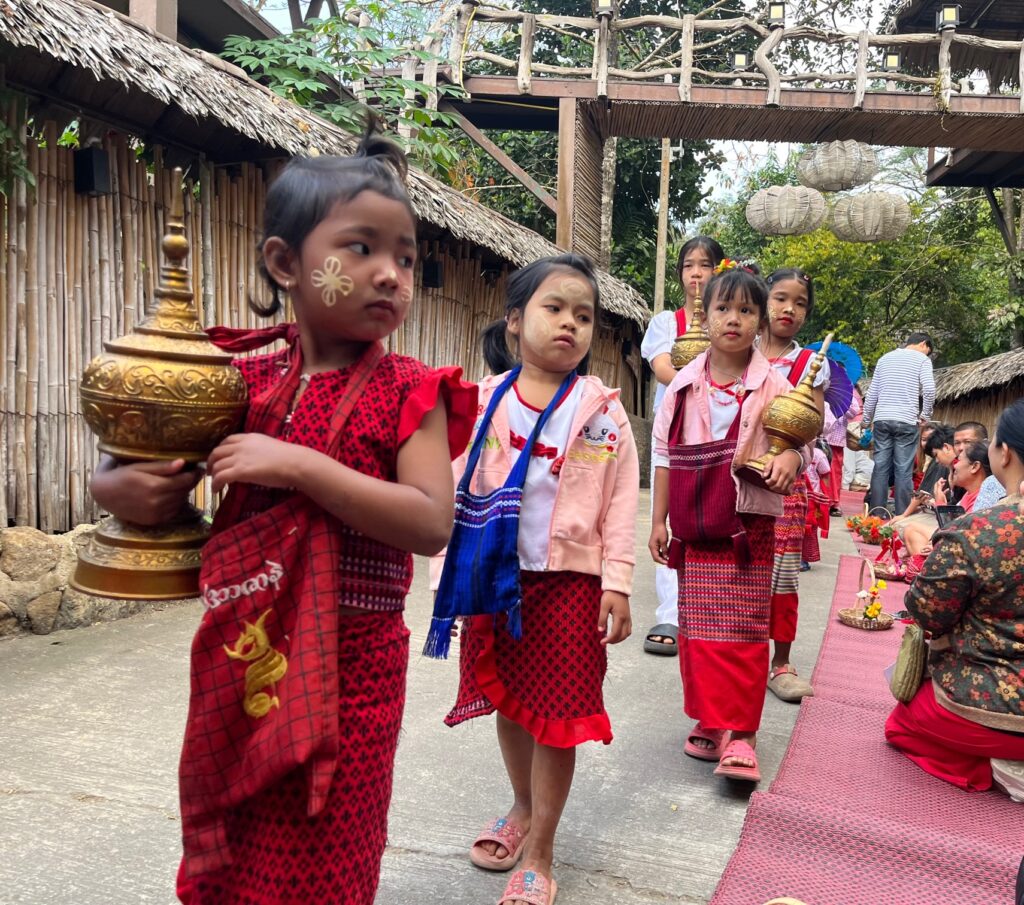
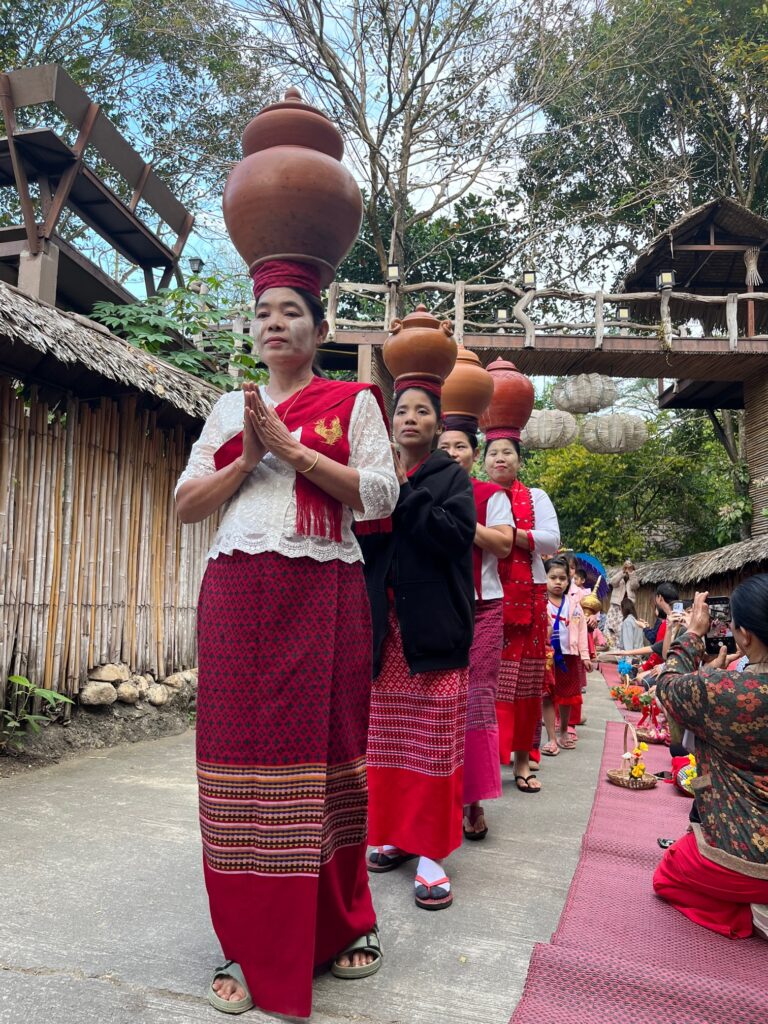
Two men carry a pole over their shoulders that has a ‘Burma bell’ hanging from it. The man at the rear clangs the bell with a wooden mallet, which makes the bell spin and produces a long, low sound that signals the arrival of the monks. As well as the monks, local women take part in the parade, carrying large clay jars (‘oong’) on their heads, while children in traditional dress join in and seem to enjoy practising their English phrases.
Once the monks have collected the offerings, there are numerous shops and cafes dotted along this street. Most are simple stalls where villagers sell coffee or the famous doughnuts the market is known for. These are made from sticky rice and then dipped in a honey mix before being skewered and placed in banana leaf trays. Many of the other goods are from Myanmar, such as the tubs of thanaka, a natural paste made from ground bark that Burmese women often use on their faces. Several homestay options are also available.
It’s a delicate balance to maintain traditional ways of life but still attract enough visitors to make them viable. These markets do both refreshingly well.
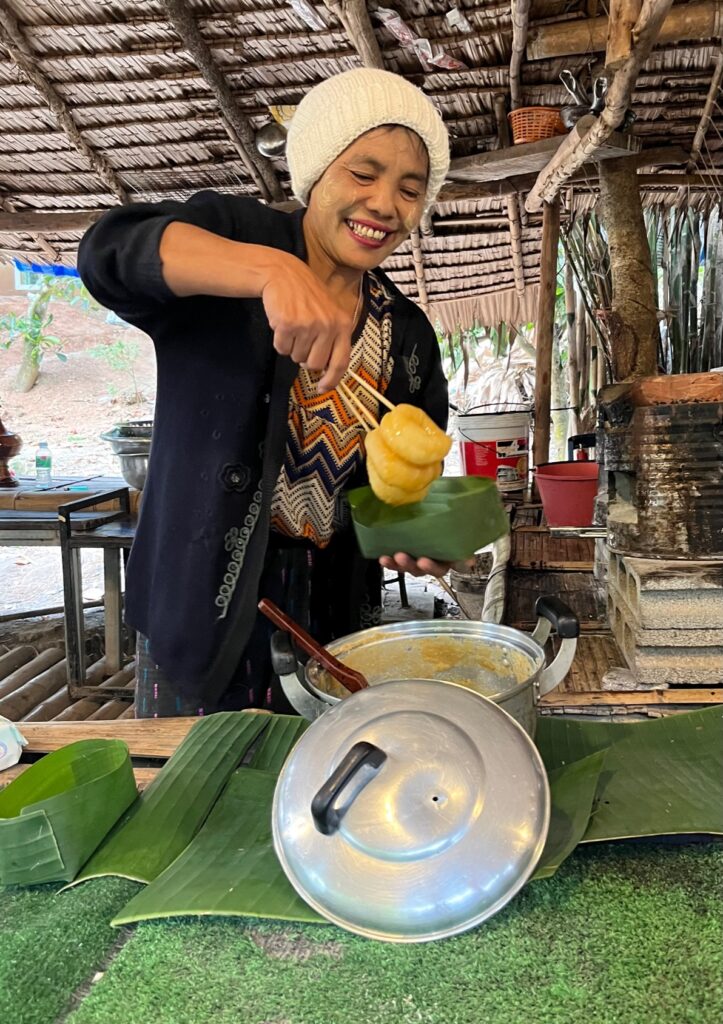
Making doughnuts at Huai Nam Sai Market
Huai Nam Sai Market