Luang Prabang may be small, but it’s packed with things to do. Here’s our round-up of the main activities and sights in this stunning Lao town.
1 Volunteering
The charming French villas, the mighty Mekong river and saffron-clad monks tend to grab the headlines in Luang Prabang.
But once you’ve got your Insta-friendly photos, what else do you do? Many tend to laze in the coffee shops and stroll the streets in their Beer Lao t-sihrts. But there is a far more rewarding way to spend your time here.
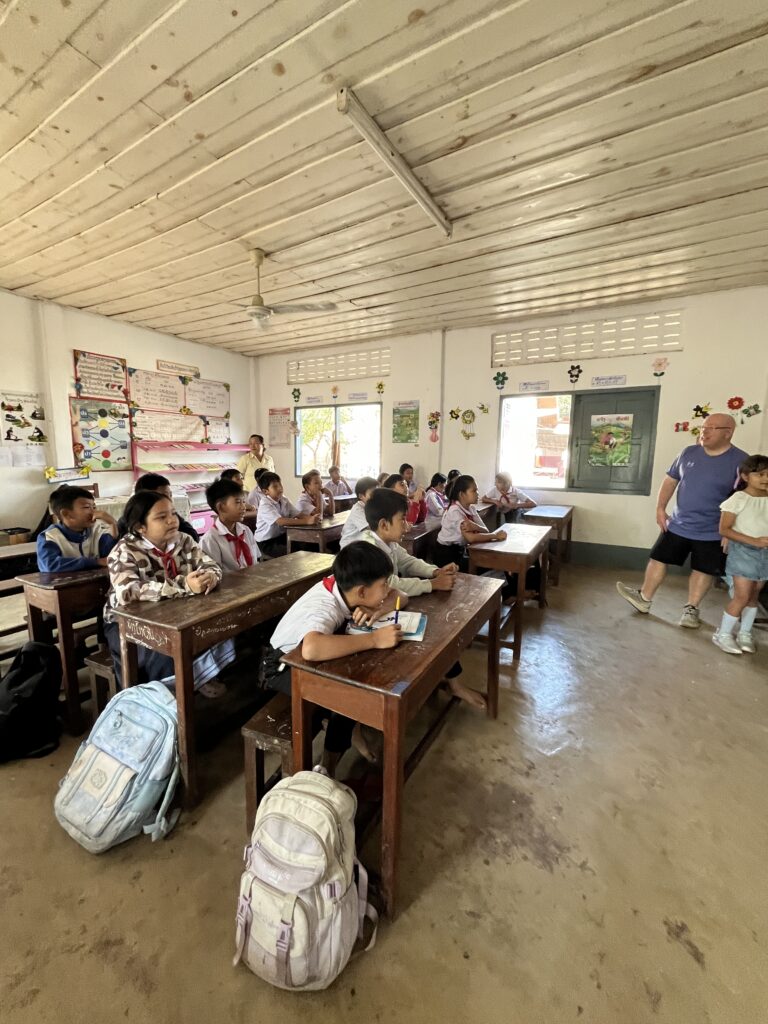
Given the obvious needs in Laos, volunteers are in great demand. Luang Prabang has some excellent non-profit organisations who need help and, in return, offer bucket-loads of good karma.
Among the best are Big Mouse Brother and My Library.
2 Markets
Mercifully, there are no shopping malls in Luang Prabang. Instead, the place is full of markets. There are wet markets on the outskirts, there are fruit and veg stalls dotted along the streets and there are bustling day and night markets in the centre.
The day market has a refreshing number of local stalls, offering cuts of meat, kanom krok (tasty semi-circles of cooked bamboo milk and rice flour) and the usual tourist souvenirs. At night, the street by the former Royal Palace is pedestrianised and silver bracelets, toy elephants and handwoven textiles are laid out on the pavement. At the far end is a seated area with food stalls enveloping it, offering everything from cheeseburgers to deep-fried toad.
3 Kuang Si Waterfall and bear rescue centre / waterfalls
Around 30 kilometres south of Luang Prabang are the area’s most stunning falls. Near-transparent water tumbles down several tiers, ending in a shallow pool where visitors can swim. The falls have been left fairly undeveloped so there are only a handful of facilities, the limestone rocks are uneven and a little slippery, but the water is reassuringly chilled.
There is a simple changing area nearby and good viewing platforms of the tiers, in case you don’t want go get your feet wet. Finding the falls is easy as nearly every taxi driver you meet will mention Kuang Si. Stop by the entrance to visit the Free the Bears – Tat Kuang Si Bear Rescue Centre, home to moon bears who have been saved from cruel farms that milked their bile.
Tickets for the falls: 60,000kip
4 Temple watching
Royal Museum and temple
It may seem a little odd for a communist state to be celebrating their former king, but that’s exactly the deal at the former Royal Palace Museum.
Dating back to 1904, this erstwhile royal palace gives an insight into the life of King Sisavang Vong and his family. In 1975, all that changed when the government took over the building and the king was forced to abdicate. Today, this is a national museum filled with snapshots from the monarch’s life, including reception rooms, a small fleet of US cars and gifts from other nations (including some moon rock from the US).
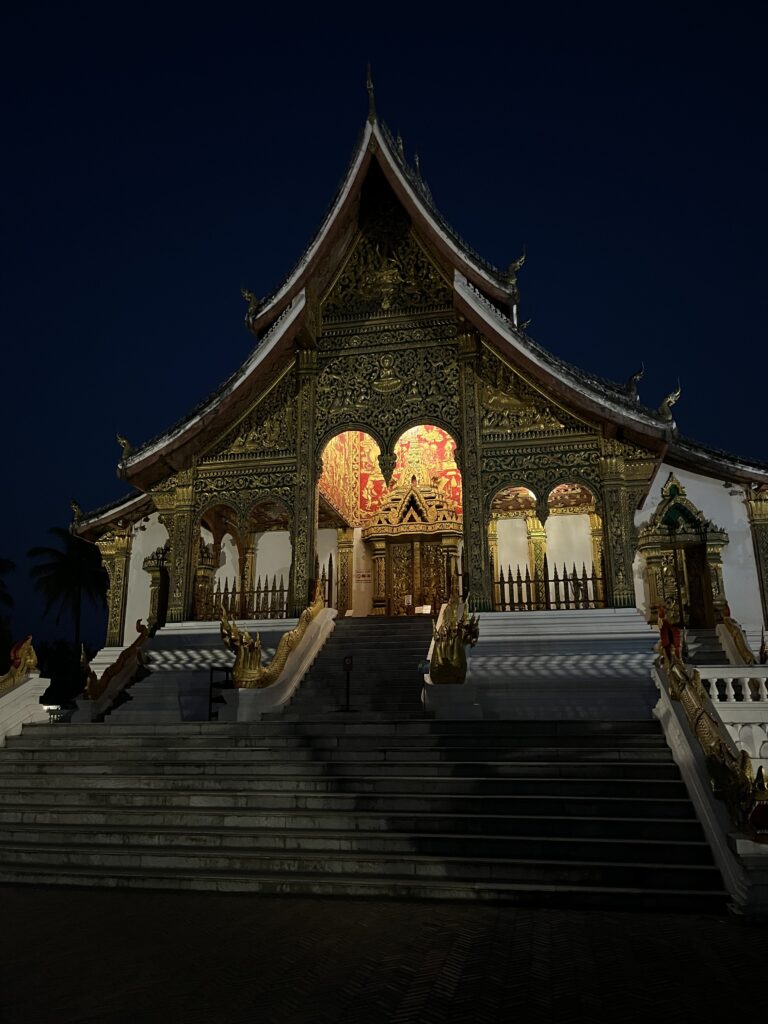
As you enter, you’ll see the stunning Haw Prabang palace to the right. Inside is one of the country’s most sacred images, an 83-centimeter tall gold-alloy Buddha statue. However, it’s really the outside that makes most jaws drop. The temple’s sloping three-tiered roof, gilded images and intricate carvings are stunning. Although this version of the temple only dates from the 1960s, there has been a temple at this site since the early 1500s.
To the left of the main entrance, you can see the city’s best cultural performance. Phralak Phralam is a two-hour show starring masked dancers who tell traditional stories. Held in the former royal palace ballroom, shows take place on Mondays, Wednesdays, Fridays and Saturdays at 6pm. Get your ticket in advance as they often sell out.
5 Living Land Company
A communal organisation, this educational project teachers visitors about rice production.
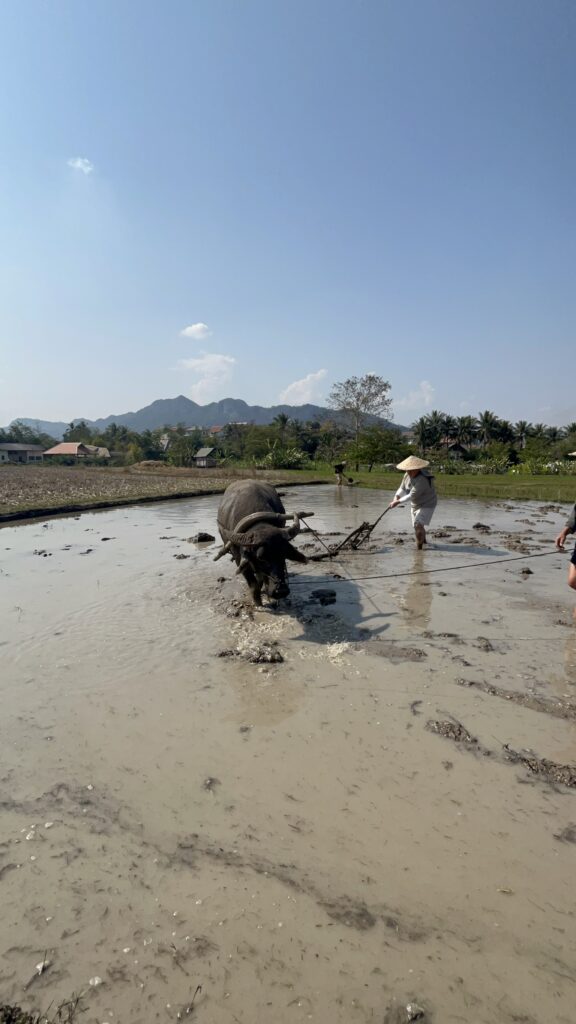
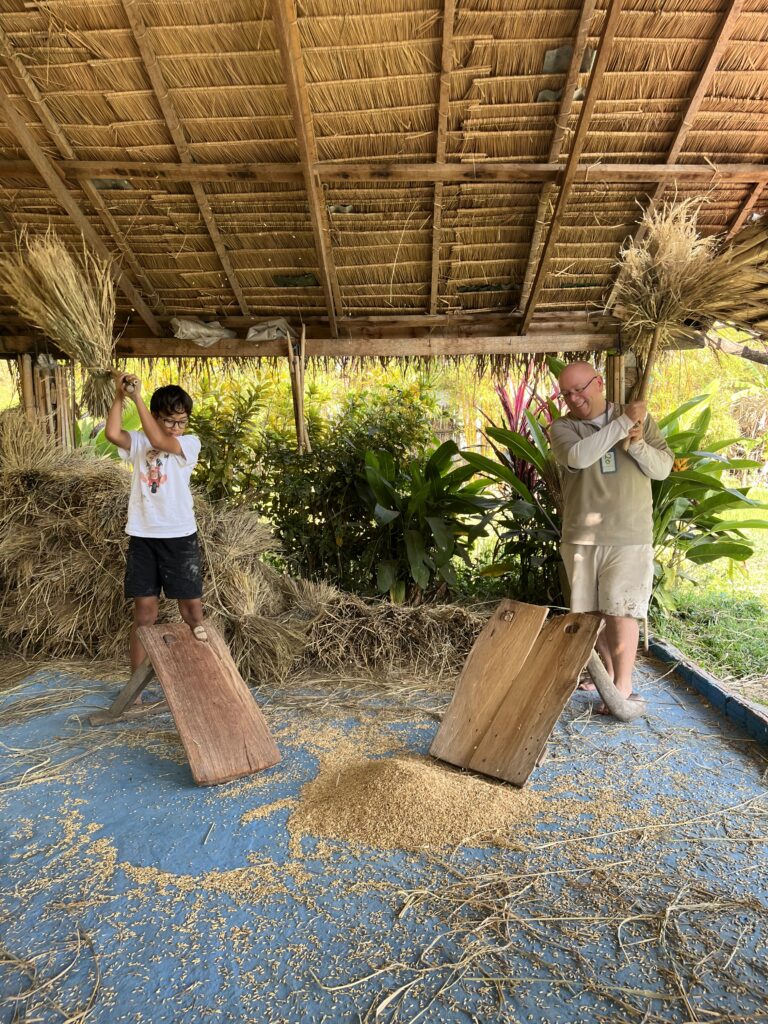
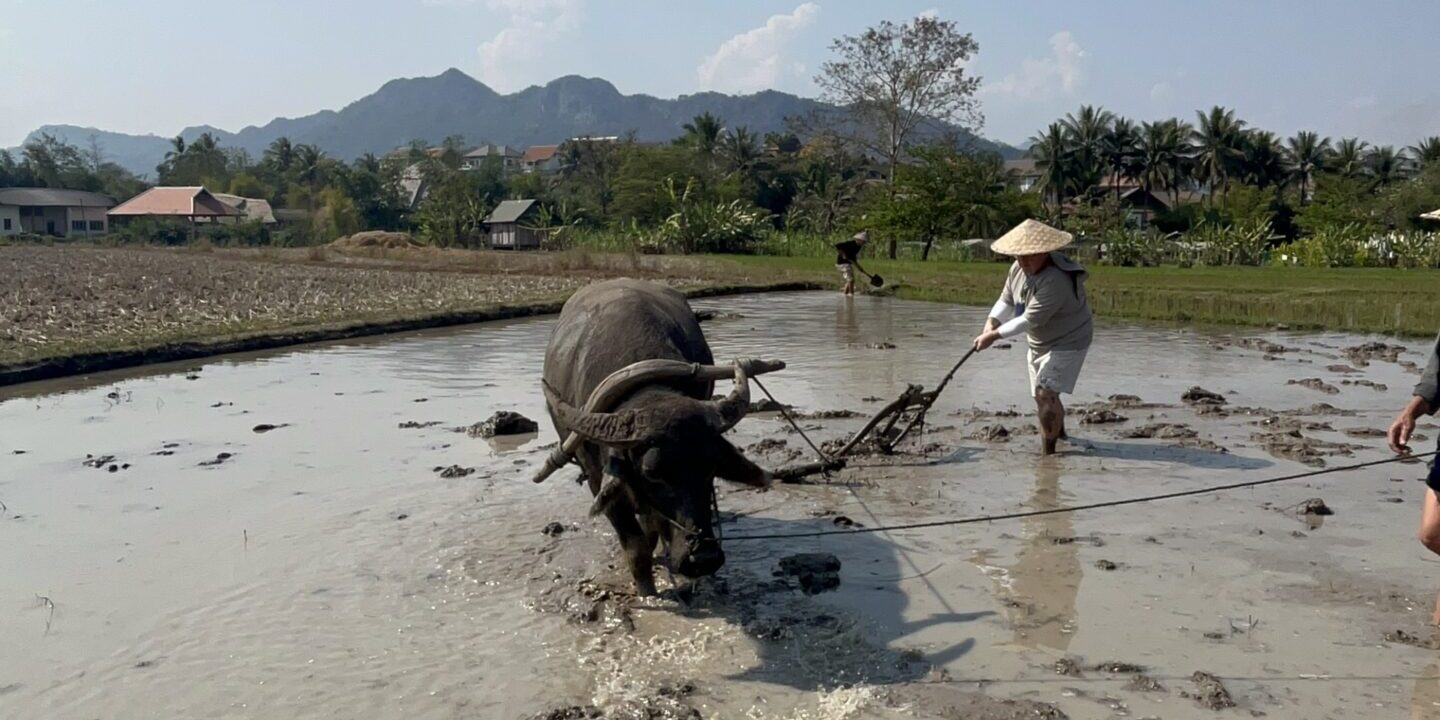
Tours cost US$36 per person (free for under 10s) and take you through the 13 stages of rice production. Step one – quite literally – involves wading through knee-high mud fields to get to the rice saplings. You then get to steer a buffalo around one of the fields then plant some rice saplings. After a few more stages, it’s time to harvest the rice, separate it from the husk, and cook it.
The seven-hectare farm, where seven families farm seven hecatres, is a practical, educational way of learning more about the various rice that Laos is famed for. Free English lessons are also provided for local children by some of the staff.
Tel: 020 5519 9209
Email: info@livinglandlao.org
Website: www.livinglandlao.org
WhatsApp: Livingland
Tip: If you book direct, they will pick you up from your hotel and return you there later.
6 Sak ba monks
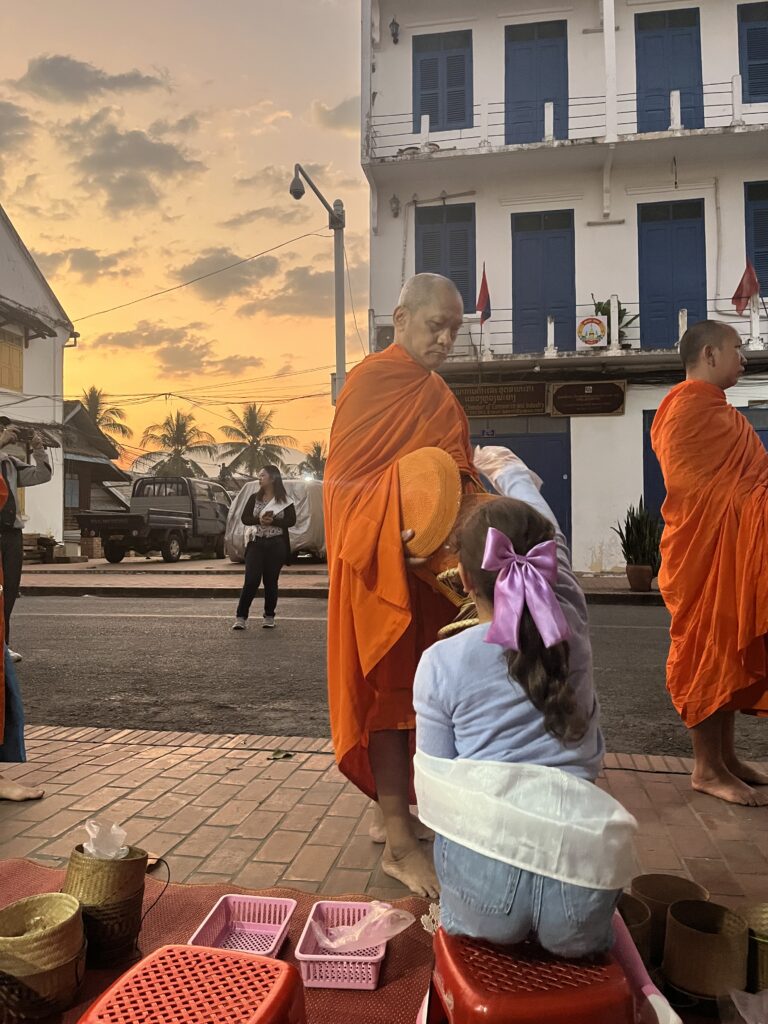
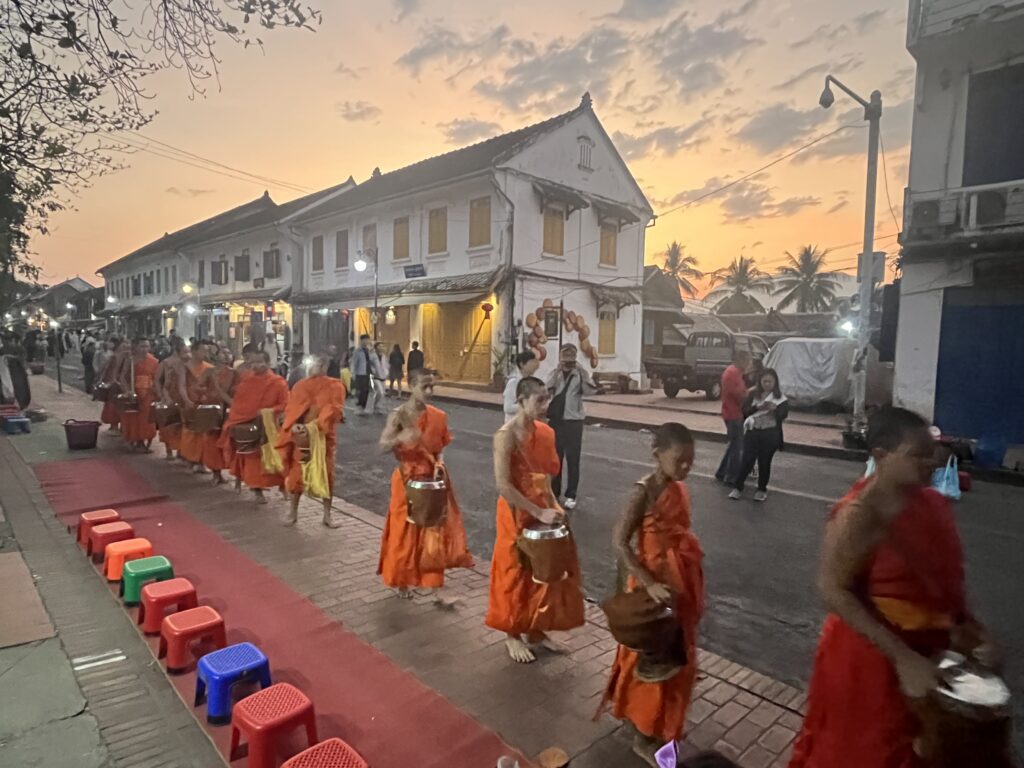
A few years ago this would have been the number one pick for things to do in Luang Prabang. These days, tour buses form a steady line at 5.30am bringing tourists in. Tourists line up to follow the parade of saffron-clad monks who collect alms in the pre-dawn light. It’s a centuries-old tradition that has become a tourist attraction.
If you do come, keep your distance, don’t interact with the monks and get your hotel to prepare some decent rice if you wish to take part (the stuff sold on the street is cheap, low-grade rice).
7 Wat Xieng Thong
Picking out one temple in a city of dozens seems unfair. However, Wat Xieng Thong is worthy of a specific mention as it is so special.
Built in 1560, this was where kings were crowned and sacred ceremonies held. The temple is made up of several buildings, each with sloping, sweeping roofs that typify the Lao style. Look out for the dark-red beams with ornate gold lettering and mirrored mosaic tiles.
Towards the rear is a simple wiharn housing a small, and unusual, reclining Buddha. Most visitors use the nearby window frames for photo opportunities thanks to their ornate carvings.
Admission: US$2
8 Pak Ou Caves
Inside the modest caves are thousands of Buddha figures that have been left here through the centuries. It makes for an ethereal, moving experience as the quiet caves host so many statues. Getting there involves a two-hour ride along the Mekong or a 40-minute road trip then a short boat crossing. The lower cave is the most beautiful; the upper cave is a bit of a walk and pitch black (though does also house some Buddhist images).
9 Cycling
Across the Mekong, away from the coffee shops and French villas, is another side to Luang Prabang. Passenger ferries regularly make the crossing, which allows access to much simpler villages and temples, in varying states of abandonment. Several travel companies offer cycling packages to here and much farther beyond, including Tiger Trail. Some of these feature treks to Khmu and Hmong village homestays.
10 Phousi temple
While the temple itself is impressive, it’s the view that draws most visitors here. Once you’ve puffed your way up the 328 steps to view the 20-metre stupa, you can then feast on the panoramic views from the top. Remember it’s a temple, so dress appropriately and don’t bring alcohol.
Hours: 6am-6pm
Ticket: 30,000kip
Before You Leave for Laos
Getting in: Luang Prabang’s airport has flights to and from Bangkok and Chiang Mai in Thailand, Hanoi in Vietnam, Siem Reap in Cambodia and Kunming in China. If that doesn’t work for you, there’s a new train link, slow boat or (if you’re really on a budget) a bus from the capital Vientienne.
The airport is a short ride from the main town. Airport touts will charge 200,000kip but the local rate is more like 80,000kip. For train tickets go here – try to book a few days in advance as they sometimes sell out.
Visas: Depending on where you’re from, you’ll probably need to get one. Do this online before you travel to avoid delays at the airport.
Getting around Luang Prabang: There are numerous tuktuks or regular taxis that charge about the same. There’s no Grab in Laos so download inDrive or Loca (which will require a local number – sim cards at the airport start from $US3). Luang Prabang is a walkable place, where most of the main attractions hug the mighty Mekong River.
Electric in Laos: Laos uses type A, B, C, E and F. The standard voltage is 230 V at a frequency of 50 Hz. You’ll probably need a travel adapter (the two-pin kind).
Communicating in Laos: English is widely spoken in the main tourist areas. If you have picked up any Thai on your travels, this is also understood as the two languages are very similar. ‘Sabai dee’ is Lao for hello though (not ‘sawasdee’ like in Thailand). For thank you, say ‘korp jai’.