From the outside, the First Hotel looks like it’s been left abandoned for years. The fading, flaking paint on the exterior makes you wonder if the place is actually open.
Only a few vehicles in the car park persuade me that it is still in business, and convince me to go inside. One step inside and the entire feel changes. A carved wooden gargoyle stares down, almost daring me to go any farther. The reception area has a sweeping teak staircase and more dark, carved figures. It looks as though I’ve walked into a haunted house from an episode of Scooby Doo. I walk over to what we’ll call the innkeeper, who hands me my key. The key is attached to a giant steel ring and, inexplicably, a spanner. It surely belongs in a jail, not a hotel.
The key opens up a huge room, complete with marble floors and, of course, more carvings. There are two coat hangers on a cardboard surround where it looks as though two moose heads should be. I feel sure if I touch either it will swing around and expose a secret chamber.
The bedrest is 8ft long and forms an elaborate teak tapestry of mermaids and fish, with a metre-long shell as the centerpiece. My room’s furniture includes two chairs with mother-of-pearl flowers carved onto the backrest, while the tables are just as immense and share the shell motif. Maybe the biggest surprise is the price for such kitsch opulence – 450 baht a night.
It’s not just at the First Hotel that surprises occur, Mae Sot has plenty of other revelations. Touching the Burmese border, a melange of people seek sanctuary here.
More than 100,000 refugees from Burma live in a handful of sprawling camps around Mae Sot. In town, a dizzying mix of food, clothes and customs makes it a fascinating place to wander. Perhaps the best place to see all this is at the border market. One-piece wooden guitars, silk bedspreads and sweets wrapped in bright paper are a few of the products.
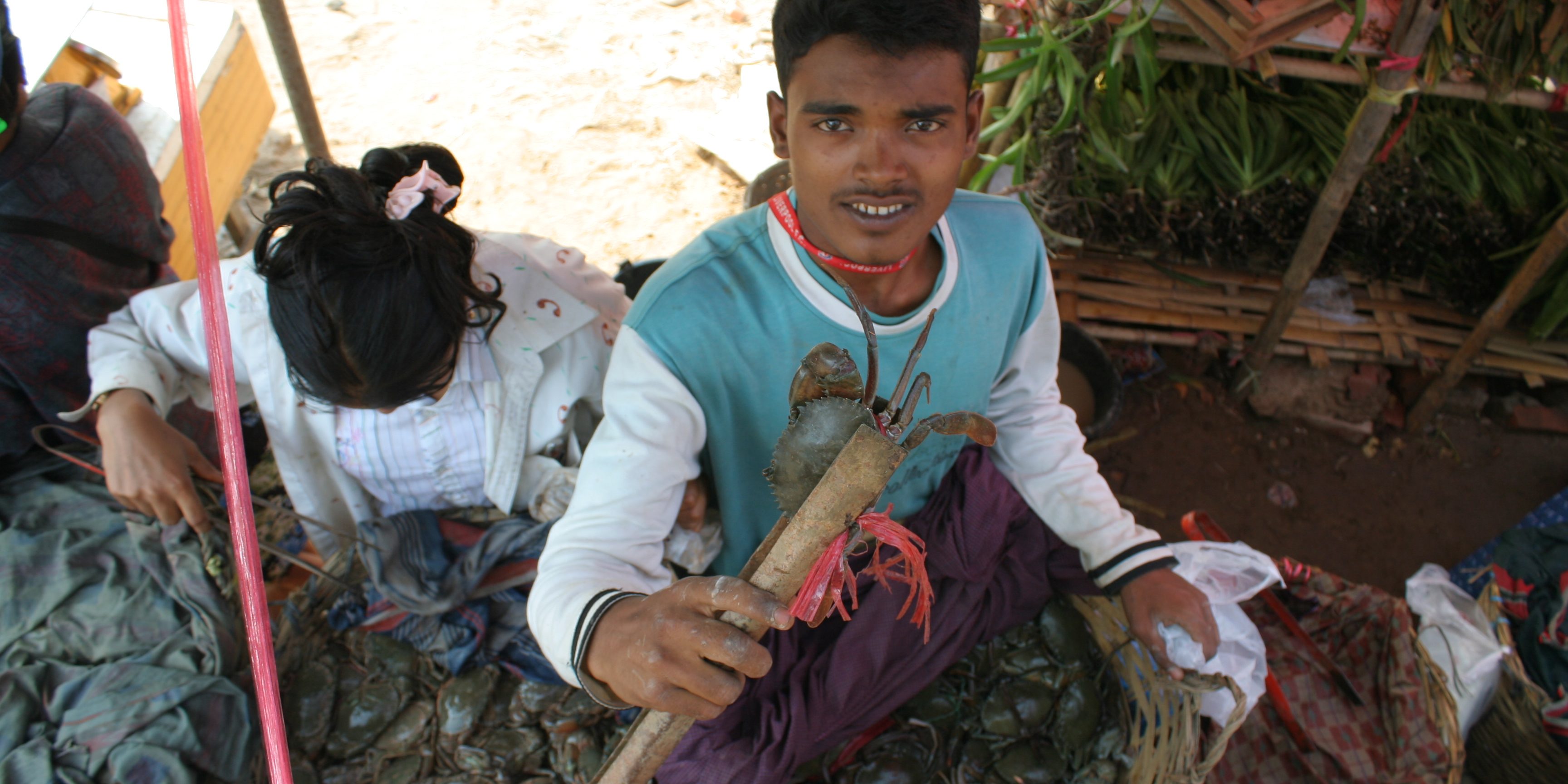
At the back of this undercover market is a bridge that leads to Burma. An armed Thai guard looks over a railing and watches a card game going on below. Also under the bridge is a man who lifts a crab up and asks to buy a kilo for 60B. He lives in a makeshift camp in wasteland between the two countries, not wanting to go back but not able to go forward.
For the few who make it to Mae Sot, people like this can be seen anywhere. The town soaks up those who make it out of Burma, but all it can do is contain them; a better solution is a long way off.
Dozens of NGO workers are based here, so for a better understanding of the issues it’s beneficial to drop in at places like Aiya, where all profits go to the charity of the same name. Its Burmese food is excellent, and while you’re eating (or maybe afterwards), be sure to check out its book collection for a deeper insight into Burma’s human rights abuses.
Just opposite Aiya is the Borderline Shop, which sells handicrafts made by refugee women. Upstairs is a great gallery and, if you have time to stay longer, cookery courses are also available.
Getting there
Most get here from Mae Hong Son or Mae Sariang. One windy road leads the way and, while it isn’t as hilly as the Chiang Mai-Pai track, there are endless chicanes. If you find yourself in Mae Sariang, songtaew will take you to Mae Sot for 200B.
Sleeping – Budget
First Hotel (05 553 1233, 300-450B) is a surreal experience, right in the middle of town.
Sleeping – Fancy
Centara Mae Sot Hill Resort (05 553 2601; www.centarahotelresort.com) is a little out of town and fading a little but, as with most Centaras, it’s still got every amenity you’d expect from a top-range hotel.
Eating
Aiya on Thanon Intharakiri is a safe bet.