Akiko clearly loves her job.
Our open-top train ride along the Takachiho Amaterasu railway only lasts 30 minutes, but Akiko puts everything she has into it.
As we enter the first of two tunnels, there’s the light show. Akiko theatrically points to the ceiling to indicate where a flurry of disco lights are about to appear.
Show over, we trundle slowly onwards to a 105-metre high bridge that sits over a gorge (back in the 70s, this was the tallest bridge in Japan). Once again, Akiko has a plan to impress. She raises one arm to the sky, suggesting we should stand, then produces her masterpiece: the bubble gun.
Hundreds of bubbles float over us, making for a spectacular photo with the mountains as a backdrop. For our two children, it doesn’t get much better than this, and they yell each time they catch a passing bubble. Our driver clearly enjoys seeing this too as she sprays the whole train with bubbles. If only we all loved our jobs as much as Akiko.
The railway, once part of a local line and taken over as a private business after typhoon damage, is one of the highlights of a visit to Takachiho. Set on the western Japanese island of Kyushu, the town is a modest affair that benefits from having an enormous gorge, active volcanoes and several connections to Shintoism.
Takachihio Gorge, a short walk down a meandering road near the town centre, includes waterfalls, volcanic rock formations, and a flotilla of tourists trying to figure out how to row their boats down it. It’s like dodgems on water. We manoeuvre ourselves into a quieter stretch of water and pause to admire the view. At times like this I try to remember the poem ‘Leisure’ by William Henry Davis. Usually, I get as far as ‘What is this life, if full of care, we have no time to…’ when my son adds ‘stand and stare. Can I have your phone now?’
The rowing boat is a highlight of any trip here, though there’s a five-hour wait if you don’t reserve in advance. Nearby sit a handful of shops and a modest aquarium. Lunch options are limited to one spot, where you have to catch your own food – literally. We sit on wooden benches and stare at a long bamboo tube that water flows down. Every so often, noodles will float down this and our challenge is to grab them with our chopsticks. The noodles then accompany local fish and vegetables to complete the meal.
Back in town, we return to our two-star hotel. The pony-tailed owner, who’s in his 70s, greets us and shows us to our room. Our bathroom, painted an unusual shade of turquoise, must have looked the same since 1973. The room is traditional with tatami mats and futons, which occupy nearly the entire space. Still, it’s central and a short walk from our evening entertainment: Takachiho Kagura, an ancient form of masked dance (1,000Y per person; children free). We sit on tatami mats and watch the story of Amaterasu, a sun goddess who hides in a nearby cave to get away from her annoying brother. Other gods come to find the cave and persuade her to leave, as her disappearance has plunged the world into darkness.
The first of those hoping to help is Tajikarao, sporting long blonde hair and a fierce black-and-white face. To the rear of the stage there are two large, black, round pieces of cardboard, which I take to be the cave. Tajikarao’s movements are graceful and accompanied by bells that jingle with each subtle movement. He does this for rather a long time without finding any trace of the cave. At this point, my son wants to add a pantomime flavour and call out ‘it’s behind you’. I suggest that this isn’t the place.
Other characters include Totori, a red-faced god with long black hair (who does find the cave), and an elderly couple who brew sake, drink it and then drunkenly fall asleep. Next to the action are a couple of drummers who produce a relentless, haunting beat throughout. At the end one of them takes the mic, I assume to explain the importance of this ancient art form. He does so, but then moves swiftly on to remind us how we can buy paper versions of the characters for 500Y from reception. Ancient art forms don’t pay for themselves, you know.
The actual cave that is the focus of these performances is home to the Amano Iwato Shrine. The next day we take a bus here, then take a short, pleasant walk past moss-covered walls and across stone bridges that straddle gentle streams. At the shrine itself, visitors stack three or four pebbles on top of each other and make a wish. Thousands of these creations sit in and around the shrine and cave entrance.
We move on from Takachiho, which is in the northern province of Miyazaki, and head to Yufuin. Close by is another highlight of this region – the mighty Aso volcano. One of the most active volcanoes in the world and with one of the largest caldera, it’s possible to get to the top (there used to be a cable car but the 2016 eruption finished that off). A bus service now takes visitors almost to the crater, unless the poisonous gases are too active and the place is closed off. A local site gives regular updates on what mood the volcano is in.
Our bus to Yufuin drops us in the town centre and we stay at the charming Yufuin Lamp no Yado. Yufuin is a tiny town with a spectacular mountain range and hot springs close by. Tourists tend to gravitate to the main street, which is filled with restaurants serving local beef and ice cream (both recommended). Towards the end of this path is Yufuin Floral Village, a surreal collection of pseudo-British cottages. Each one sells Alice in Wonderland, Peter Rabbit or Moomin-style toys. The village is also home to a few dozen owls that you can pet – in a nice touch, the newer owls that aren’t used to being approached have a yellow and green badge, just like learner drivers in Japan. In a less-nice touch, most owls are chained to their perches and have little chance to move freely.
Perhaps the best thing about this street is that it leads to the gorgeous Kinrin Lake; we arrive just before sunset to witness a carpet of golden, orange and red leaves on the surrounding mountains just as an autumnal evening begins.
Back at our hotel, the five private onsen are now available (not everything here is traditional – there’s a QR code in our room that lets us check which onsen are currently in use). The water comes straight from the mountains and is suitably clear, and properly hot; most onsen hover around the 42 degree Celsius mark.
Yufuin is similar to much of Kyushu, blessed with natural surroundings and a huge helping of history – including the more recent past in the form of Nagasaki – but it’s the lesser-known locations that make it worth a look.
Kyushu Quick Facts
- Kyushu is Japan’s third-largest island
- Although it’s an island, the place is famous for its mountains and hot springs. If you’re looking for beaches, head to Takahama in Nagasaki (and nearby Gunkanjima, where the James Bond movie Skyfall was shot)
- You’re probably going to start your trip in Kyushu at Fukuoka or Kumamoto. If it’s the latter, be sure to visit Kumamoto Castle. Having survived typhoons, wars and earthquakes (though damage from a 2016 quake is still very visible), it’s doing well for a building that was first constructed in the late 15th century.
- Kyushu literally means ‘nine provinces’
- It’s closer to Seoul than Tokyo
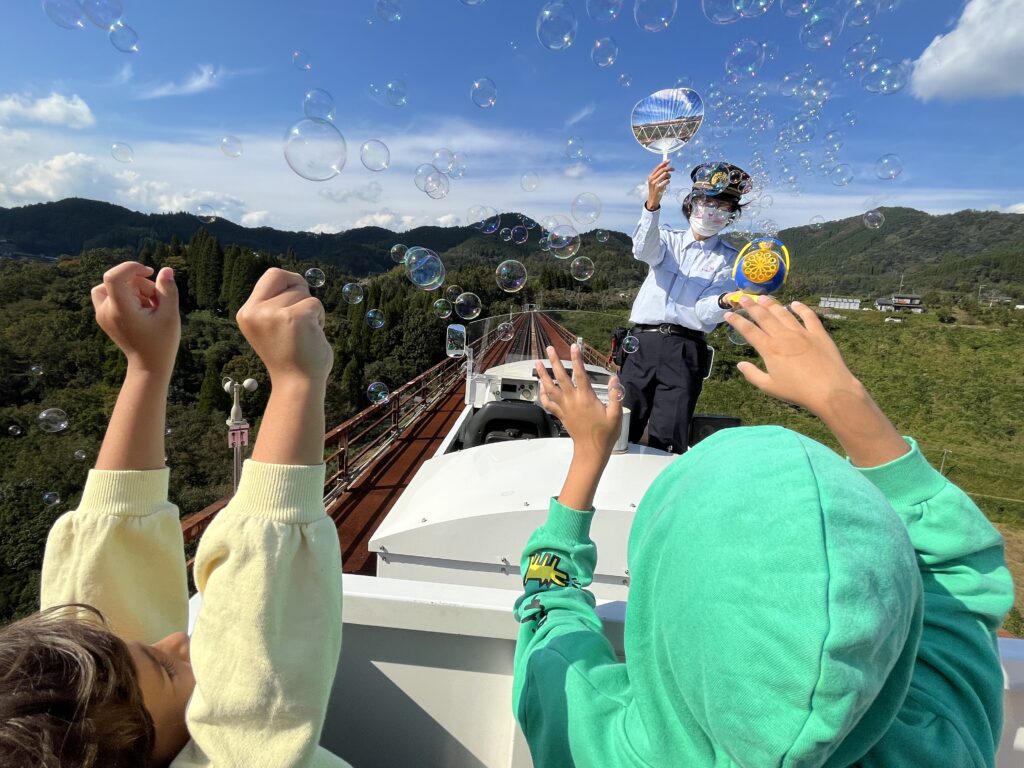
The Takachiho Amaterasu railway
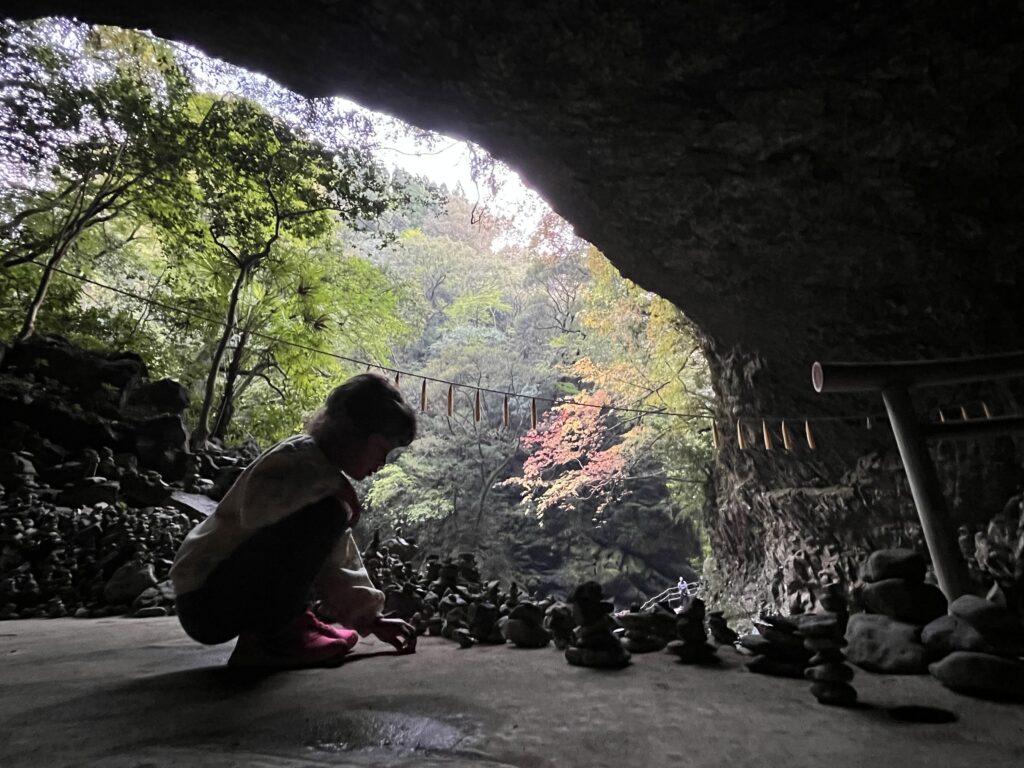
Amano Iwato Shrine

Takachihio Gorge
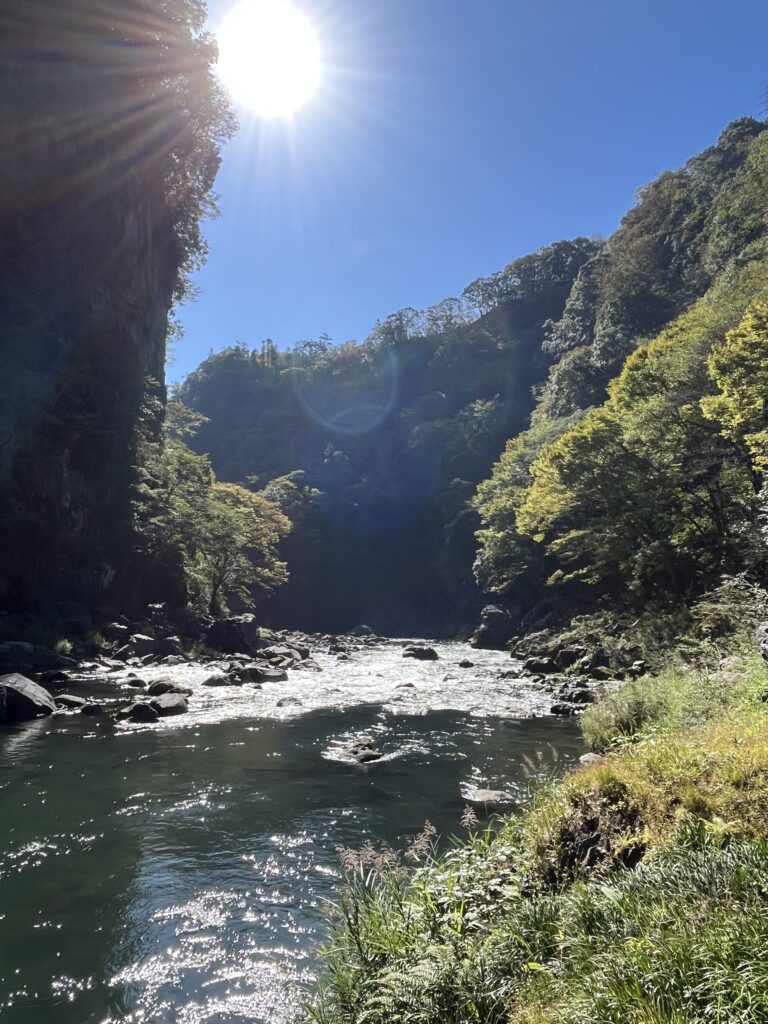
Takachihio Gorge
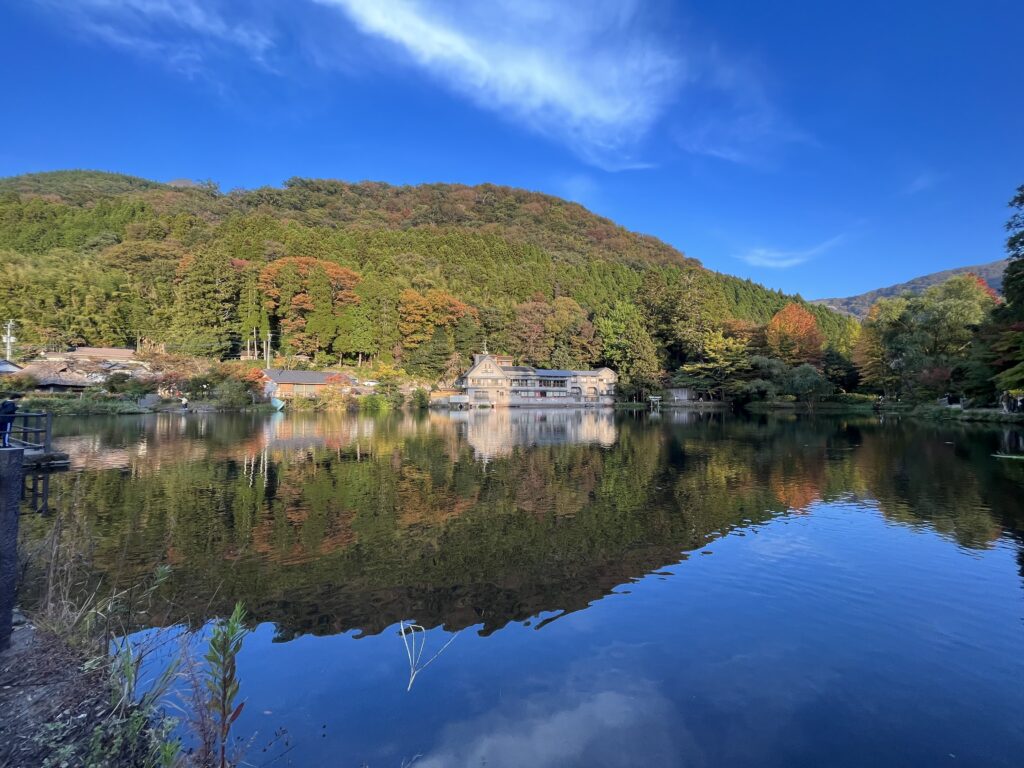
Kinrin Lake in Yufuin

Yufuin
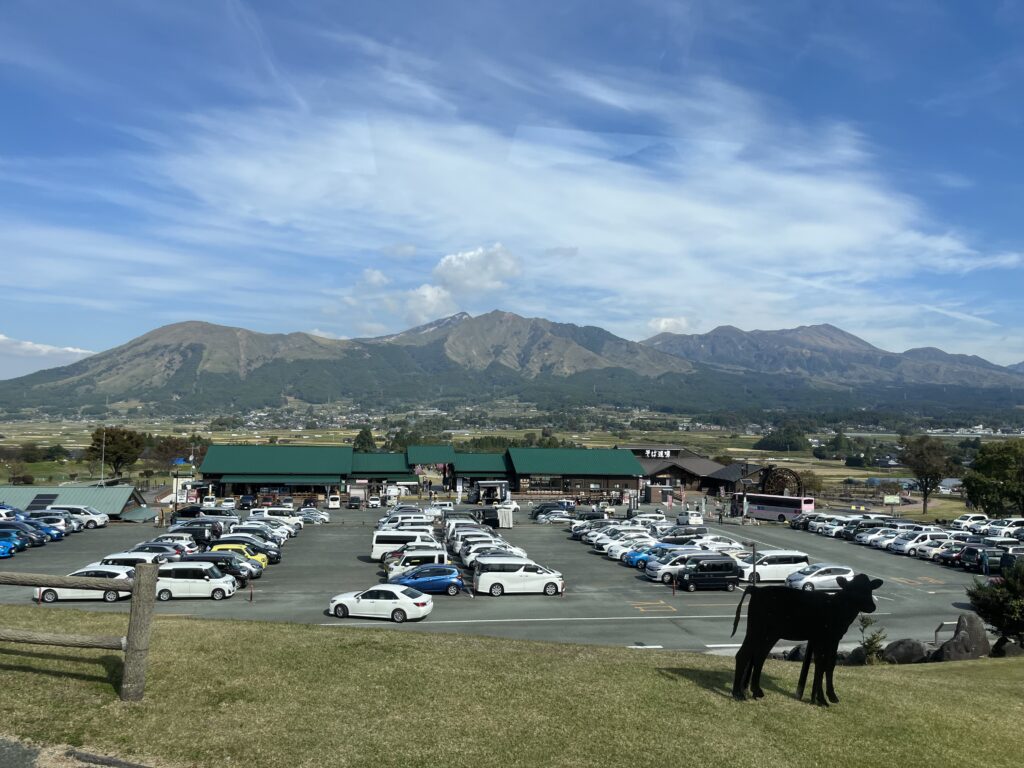
Mount Aso

Kumamoto Castle