If we’re honest, Koh Mook isn’t the greatest of Thailand’s islands.
Its bigger neighbours – Koh Lanta and Koh Tarutao – tend to steal the limelight. And at first glance, you can see why. Koh Mook (literally Pearl Island), which sits just off the coast of Trang in southern Thailand, has some good beaches. But locals will tell you not to go barefoot in case of hidden rays or fishing flotsam buried in the sands.
It has a handful of local restaurants, but no real nightlife. You can get from one side of the island to the other in ten minutes, but it’s an off-road journey for the most of the way through forgotten paths.
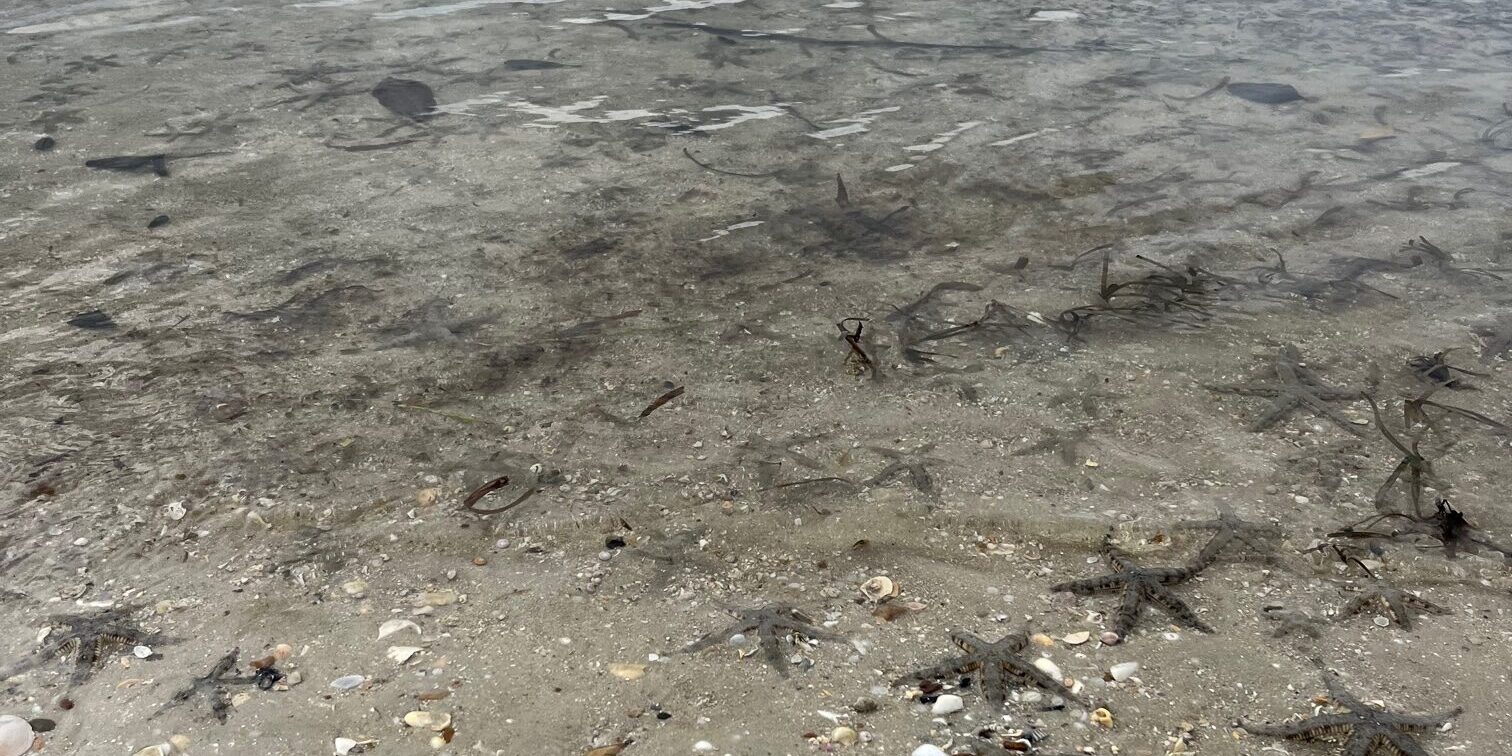
However the island, also known as Koh Muk, is all the better for the lack of proper roads, brand-name restaurants and pristine beaches. At sunset each day, our beach was home to hundreds of starfish, while above eagles swooped down to catch fish and hornbills hopped undisturbed from treetop to treetop.
This is a mainly Muslim island, so the restaurants and quiet nightlife reflect that. There may not be many options but the spots we found offered great home-made food (especially the Penang curry) and super-friendly service. Given that the island has been virtually closed due to covid up until early 2022, there’s almost a sense of surprise when visitors do appear. More locals are in the fishing business than tourism, judging by those who spend their days unpicking nets and flinging crabs into buckets to sell to one local lady, who passes the crabs on to a nearby factory.
Despite all this, Koh Mook does host one true treasure – and it’s our favourite place in all of Thailand. On the island’s more rugged western coast sits Tham Morakot, or the Emerald Cave. Accessible only by sea, visitors swim through a dark cave for 100 metres, then discover a hidden lagoon that is jaw-droppingly gorgeous. Although it’s often closed due to unpredictable weather and tides, if you stay on Koh Mook during the dry season you can make an early-morning trip there and beat the dozens of visitors who will fill it later in the day.
Another reason to come during dry season is the chance to see the ultra-rate dugong. Several travel agencies on the island will take boats out among the sea grass that these gentle giants love to graze on, but there’s no guarantee that the dugongs will make an appearance.
Koh Mook may lack plenty of things (there are only 2 ATMs on the island and no 7-Elevens), but it’s that lack of ubiquity that makes it so appealing. My sunset walks along Pearl Beach were wonderfully tranquil, accompanied only by the sound of gently breaking waves and the occasional cry of the hornbills.
Koh Mook may not make ‘Top Thai Islands’ lists but, if we’re being honest, it’s all the better because of that.
Getting there: Longtails or speedboats make the short trip from Khuan Tung Ku Piet in Trang.
Sleeping: Mid-range or budget. The three-star Koh Mook Sivalai Beach Resort has a series of wooden cabins facing the beach from around 2,000THB. There are a handful of other places, ranging from 500THB upwards. Be aware that sandflies are omnipresent so you’ll be almost showering in insect repellent. Make sure your room has a mosquito net.

The artwork of the sandcrabs on Koh Mook, Thailand.

Under the pier at Koh Mook, Thailand.
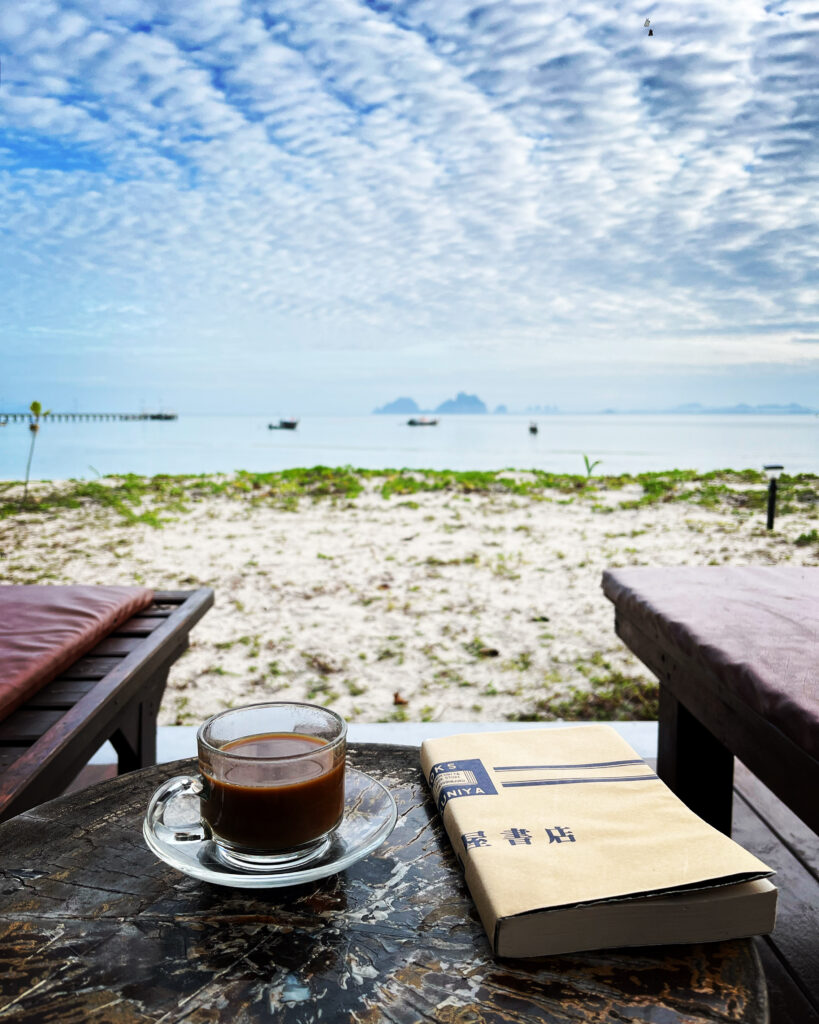
Early morning coffee and a book on Koh Mook, Thailand.
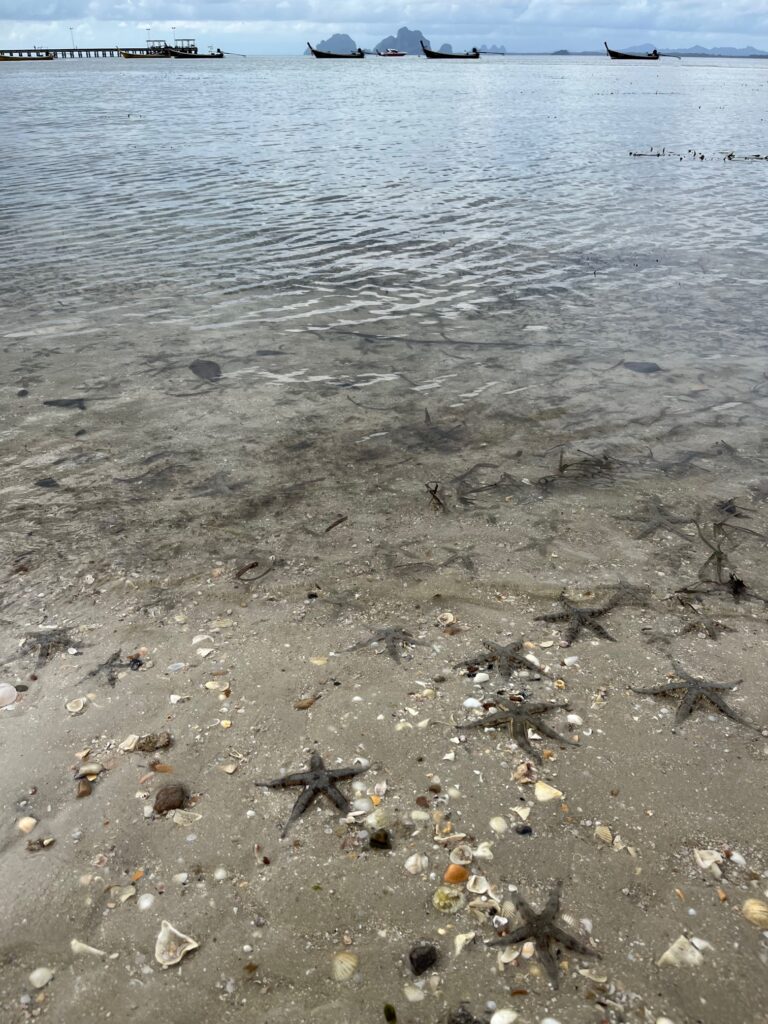
Dozens of starfish on Koh Mook’s Pearl Beach.