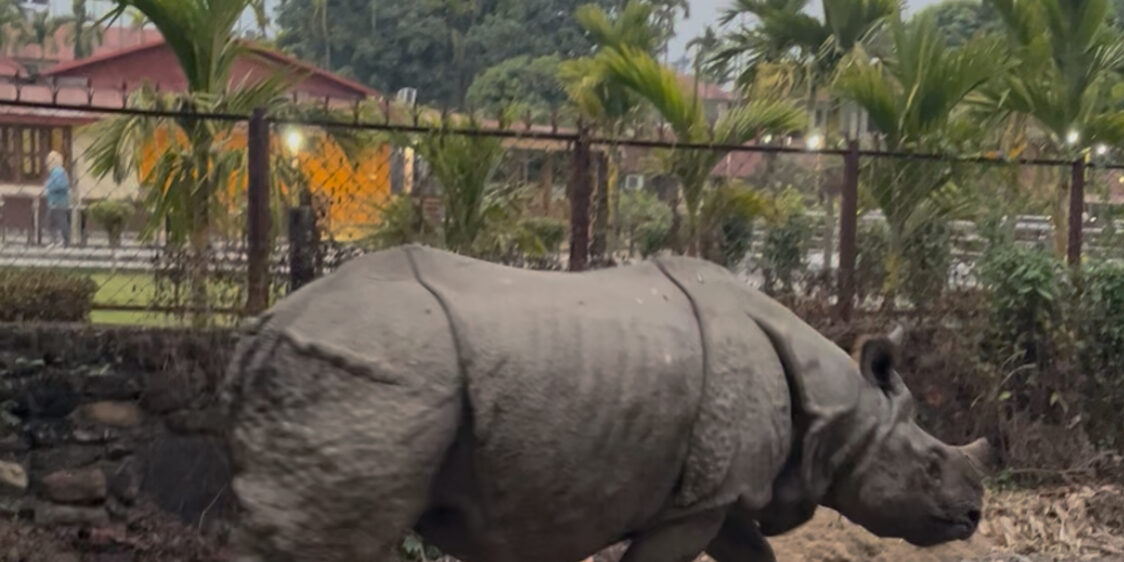
Traffic jams in Nepal aren’t unusual. However, the cause of this one was odd.
As we sat waiting patiently, a rhino walked past. A greater one-horned rhinoceros, to be precise. Ignoring the stares, it turned left into a hotel and headed for some plants. We jumped out of our jeep and followed, watching as it casually tore away at some leaves then strolled off through a field of lemon-yellow mustard seeds.
Our guide, Jagat, has seen it all before. The town borders Chitwan National Park, which is home to rhinos, elephants, gharial crocodiles and the elusive Royal Bengal Tiger. At times, wild rhinos and elephants wander across the river that separates the park from the people to find food.
Although you may get lucky and see a rhino wander past your hotel, going on safari is the real deal. Waiting in silence as a monkey screeches a warning about an approaching tiger is mesmerising. It’s just one of the ways Nepal surprises and reminds you that there’s more to the country than Everest and trekking.
Chitwan
Chitwan National Park, a UNESCO World Heritage Site, offers the chance to see an incredible range of wildlife. It’s also one of the few places where walking safaris are available, though not all guides recommend them. Tigers have killed villagers and elephants have trampled people to death. Trackers arm themselves, not terribly reassuringly, with a big stick, which Jagat tells me is very effective when waved at a predator. We opt for the jeep safari (US$170 for half-day, US$210 for a full day).
When not faced with man-eaters, Chitwan is actually a laid-back town with a culture of its own. Its Tharu people, for example, put on nightly cultural shows (their complex stick dance is impressive) and have their own museum. Up until the 1950s the Tharu were the only ones who lived here, helped in part by a strong natural immunity to malaria. Today, they still live here in large numbers and farm mustard, maize and wheat crops. The fields are also filled with garlic, tomatoes, cabbages and banana trees. Jagat points out the marijuana plants in one garden – apparently for one day a year it’s legal and the Tharu make a sweet porridge that features its leaves.

Crocodiles are a common site at Chitwan National Park
Kathmandu
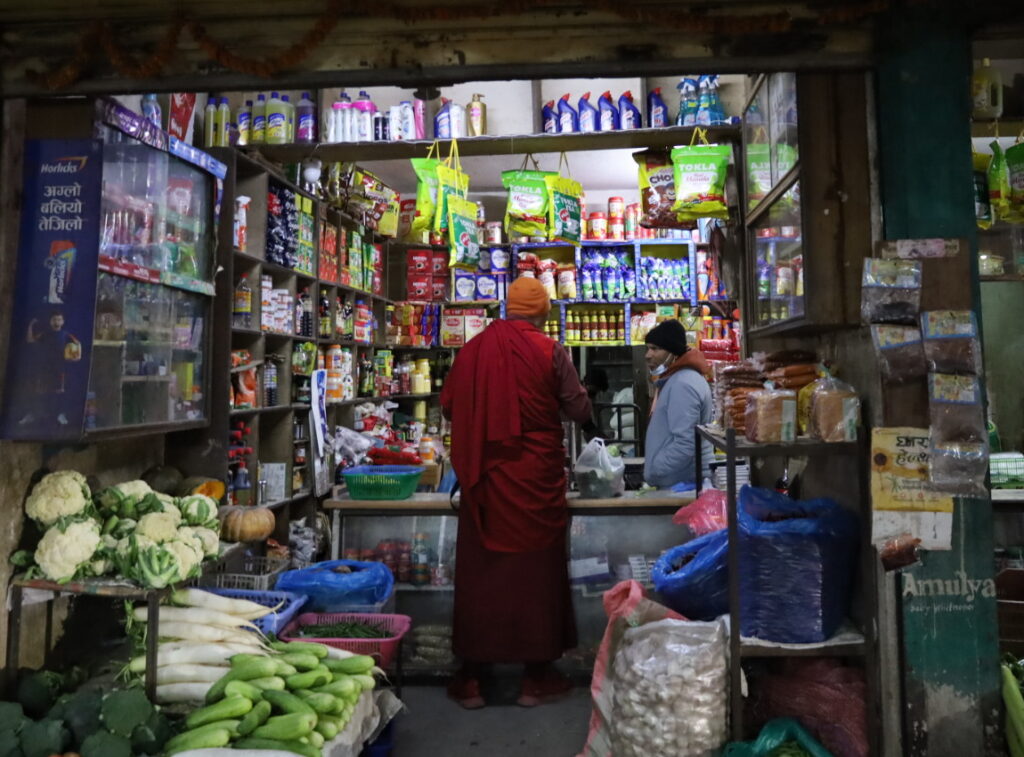
We started our journey in Kathmandu, a chaotic, crazy, colourful capital worth spending a few days in before heading out to the calmer, more scenic waters around Pokhara. Kathmandu’s main attraction is Durbar Square, a collection of 50 temples and shrines, including the god of alcohol. The approach to the temples is just as intriguing as the destination as you walk past dozens of small shops offering incense sticks, prayer bowls, silver pots, oranges and everything inbetween. Entrance to Durbar Square is 1,000 rupees (children free).
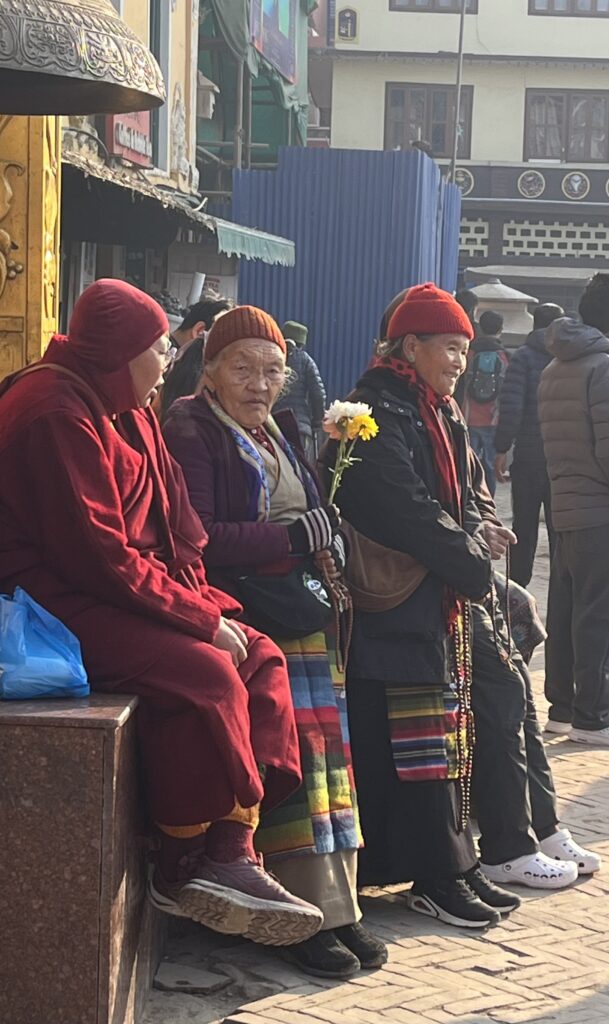
To the east of the city is Boudhanath Stupa, one of the world’s largest spehrical stupas and a UNESCO World Heritage Site. Badly damaged by the 2015 earthquake, it’s now been fully repaired. Tibetan Buddhists congregate here and walk around it in a clockwise direction in the hope of better karma. Lungta, or colourful prayer flags, flutter on numerous lines that all lead towards the stupa and its all-seeing eyes that gaze over the square.Down below, monks dressed in scarlet robes turn prayer wheels and old ladies turn their prayer beads while softly chanting. The stupa is impressive but being a part of this peaceful, reflective place is the real highlight.
Entrance is 400 rupees (children free).
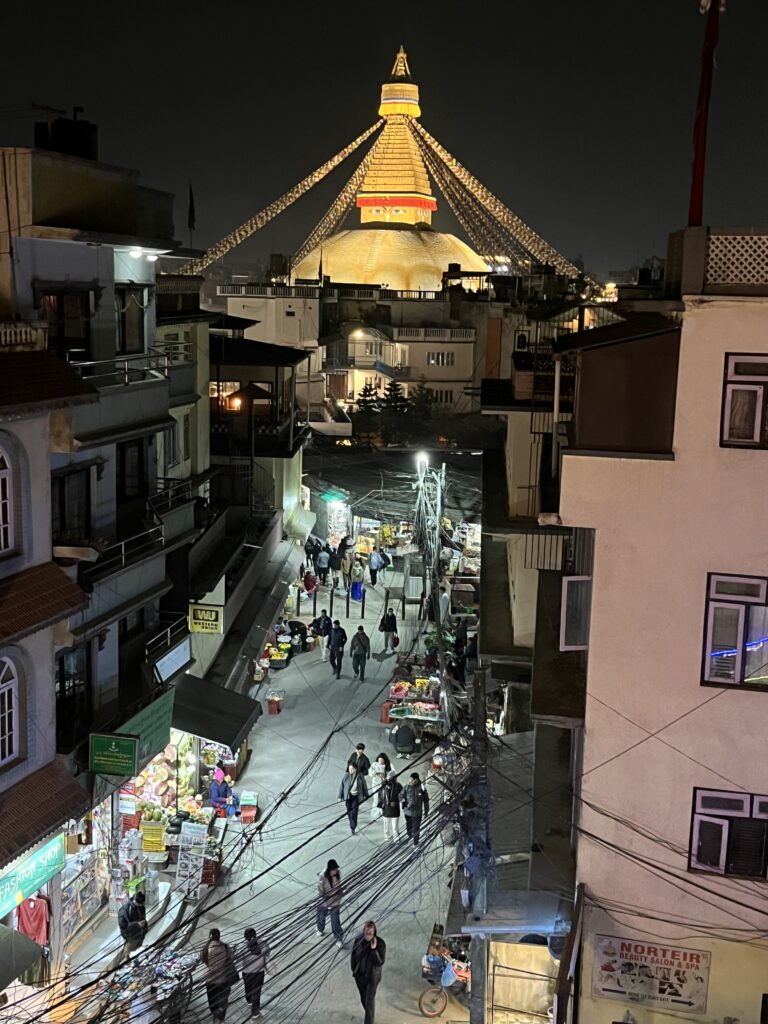
Boudhanath Stupa in Kathmandu, Nepal.
Pokhara
Once we had explored the capital, it was time for an eight-hour road trip to Pokhara. It’s worth the endless pot-holed tracks and meandering paths as the reward is Phewa Lake, a stunning body of water that’s surrounded by the snow-capped Anapurna mountain range.
Avoid the over-developed Lakeside area and stay somewhere north of there. Lakeside has endless waterfront restaurants and bars, and even its own Disney theme park, which has nothing to do with the global franchise (and also little connection with general safety standards).
During the day you can take to the water or the skies. On the lake there are paddle boards, canoes and boats. Above, the micro lights and paragliders share air with eagles.
Once you’ve seen enough of the lake, head into the mountains to see the World Peace Pagoda. This Buddhist site is the brainchild of buddhist monk Nichidatsu Fujii who, having survived the atomic bombs dropped on Japan in WW2, wanted to create a legacy of 100 peace pagodas around the world. In Nepal the uphill struggle to do this was nearly as steep as the actual 1,100-metre ride to the top. Work began in 1973, then got stopped by the government 20 years later. Devotees continued to worship on the site and finally work restarted, finishing in 1999. The pagoda has Buddhist images on each side, including one statue donated by Thailand.
Silence is a big thing here. A guard reminds people of this (somewhat ironically with a shrill whistle) every time someone talks. He also leaps into action if anyone scans their camera across the vista as videos, and specifically TikTok videos, are banned.
Back down in the bustling town, you can visit Devi’s Falls, named after an unfortunate Swiss tourist who fell in them and drowned in the 1960s. Today, the falls tumble down off several levels, with visitors kept back behind railings. Still, it’s an impressive site even from a distance and worth a half-hour stop. Less impressive is Gupteshwor Mahadev Cave, which is almost opposite the entrance to the falls. When we visited, it took 30 minutes to navigate the tight underground tunnels and damp steps (there’s only one path so those leaving have to squeeze past). At the end, there’s a slight crack in the rocks where you can see water flowing past from the adjacent falls. Let’s be generous and say we visited on a day that didn’t reflect the glorious images of emerald-green water and layered rock formations used to promote the cave.
For a real taste of nature in Pokhara that doesn’t involve the lake, some effort is required. We woke at 5.30am for a trip to Sarangkot, an area that offers incredible views over the Annapurna, Dhaulagiri and Machhapuchhre mountains. From the mountain-top steps of the Pancha Mukhi Ganesh Temple we waited.
A wall of scarlet appears first on the horizon. It’s soon joined by flecks of yellow and tangerine-orange. Clouds begin to glow and gradually the ragged outline of the Aparuna mountain range is revealed. Part of the Himalayas, its snowy peaks rise above the clouds, giving an initial impression that it’s floating. As dawns go, this is one worth getting up for.
As countries go, Nepal is challenging, fascinating and rewarding. Whether you’re meeting a living goddesses, learning about the Tharu people or just sipping Sherpa beer at a roadside bar, it never fails to surprise.


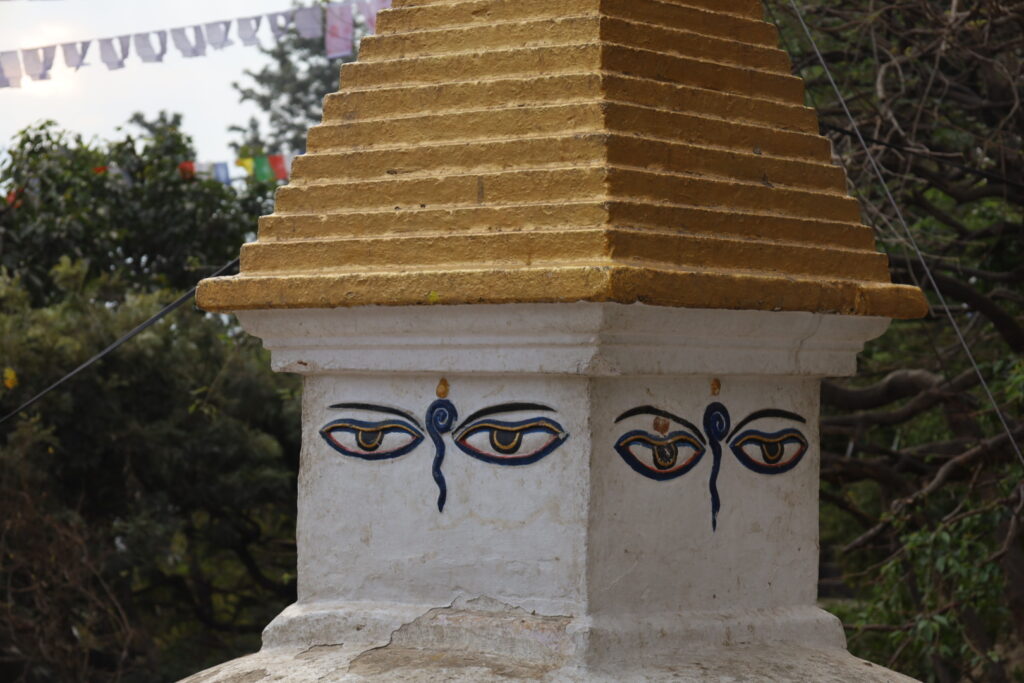

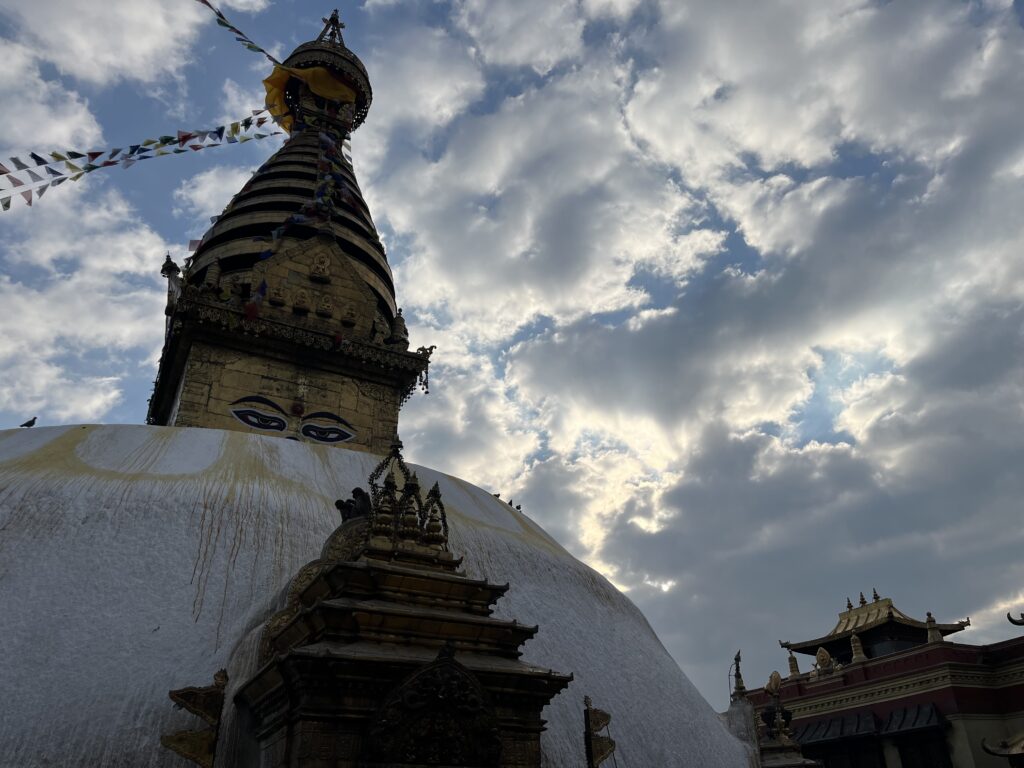
Swayambhu Mahachaitya in Kathmandu, Nepal
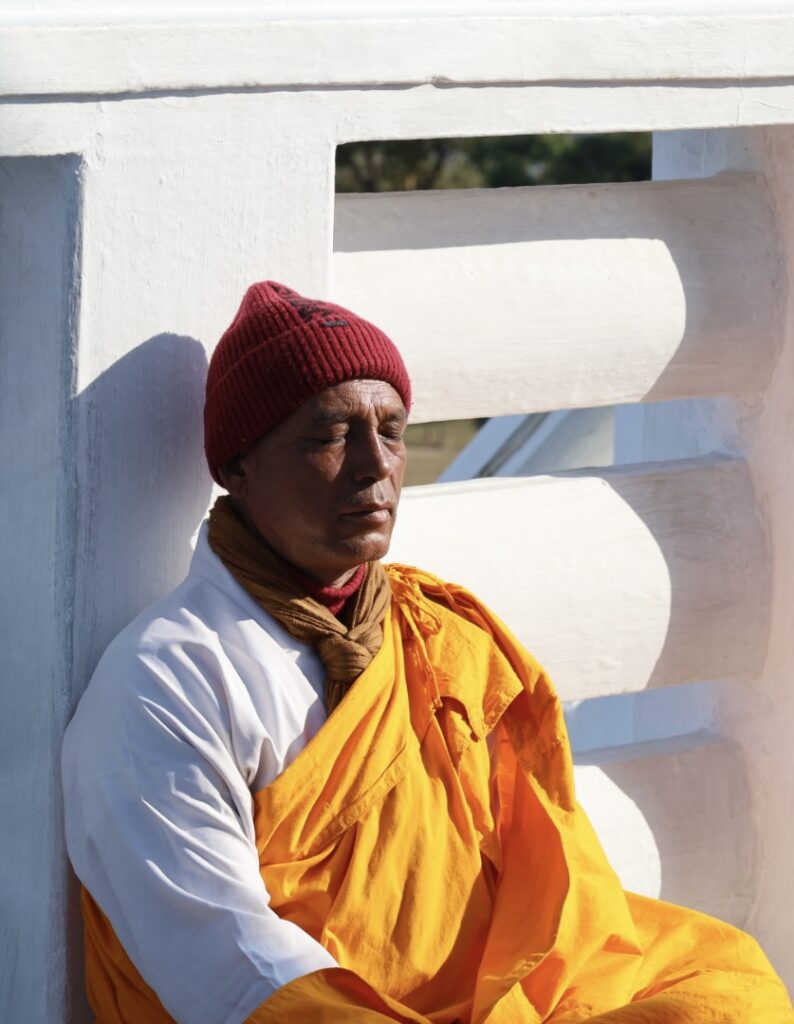
Meditating at the World Peace Pagoda, Pokhara, Nepal.
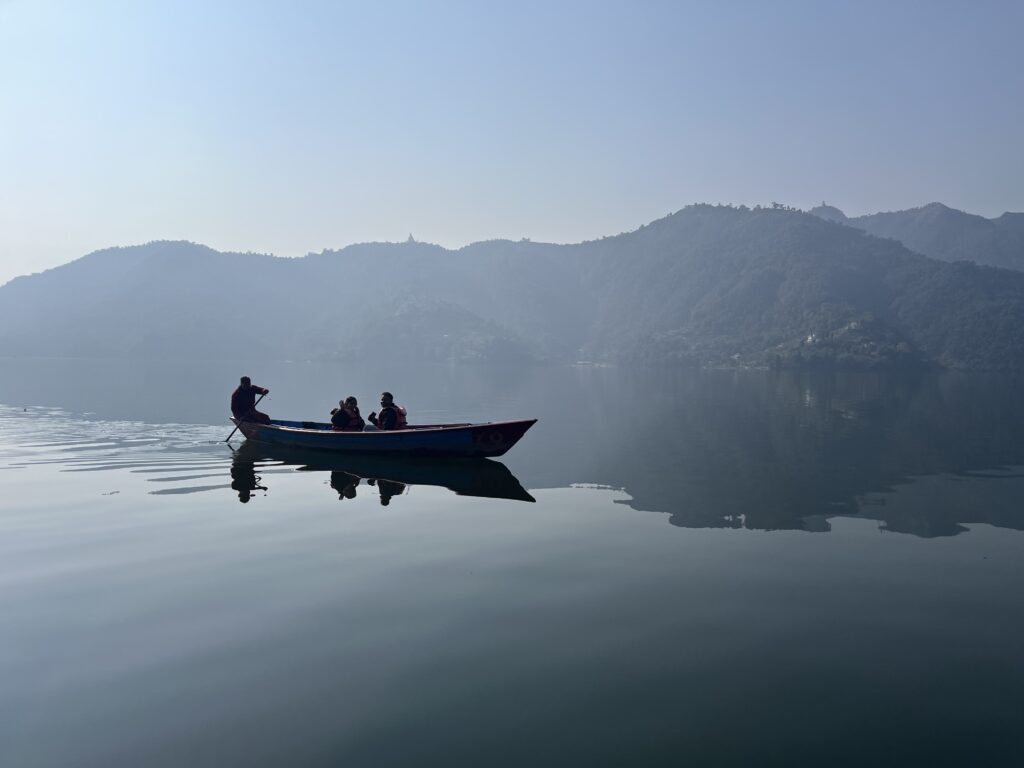
Phewa Lake, Pokhara, Nepal

Sunrise at Pokhara
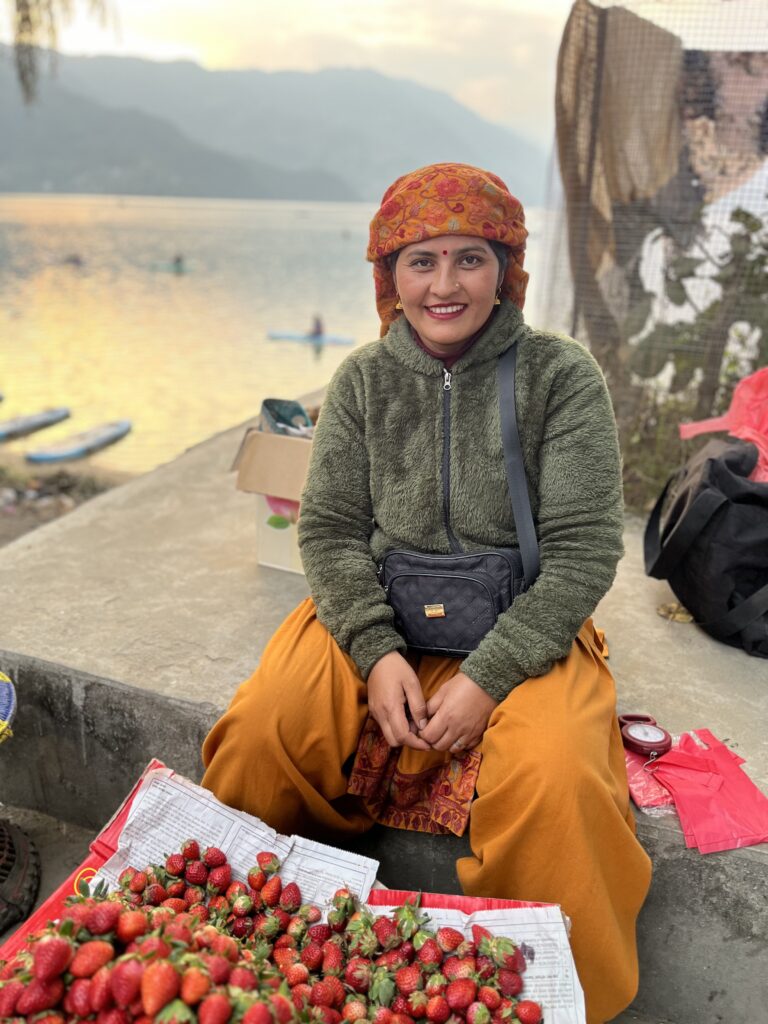
Strawberry seller at Pokhara

Chitwan Village Resort