You won’t find Phu Yen on many bucket lists.
Nestled between the signature resorts of Hoi An and Nha Trang, it’s one of Vietnam’s best-kept secrets. The province is a 45-minute flight from Ho Chi Minh City, yet is usually overlooked, even by locals.
That’s likely to change soon as resorts are starting to pop up along the virtually-deserted coastline and tour guides are keen to show visitors the natural beauty of the place.
Here’s our look at what makes Phu Yen so appealing.
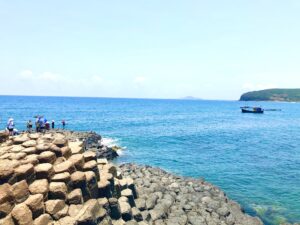
1) Da Dia Reef is a collection of blocks of rock that were formed millions of years ago from volcanic eruptions. These basalt rock formations came about when bubbling lava bumped up against the ocean’s waters. The result is this incredible collection of rocks, that resemble the aftermath of a giant game of Jenga.
There’s now an easy drive up to the site, and a tram (or horse) will then take you the 200 metres to the actual rocks. Climbing among them is allowed, and easy, given their uniformity. Such formations are rare – you’d have to travel to the UK or Spain to see the three other similar versions that exist.
As you leave, check out the small garden to the right where locals dress in Cham costume (though they aren’t actually Cham). Some of the 35,000 stones here have been used to create a 32-piece xylophone and a worker, somewhat incongruously, plays Jingle Bells for any visitors.
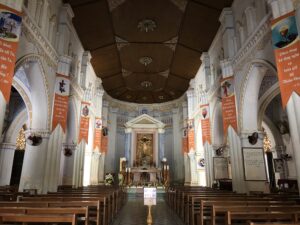
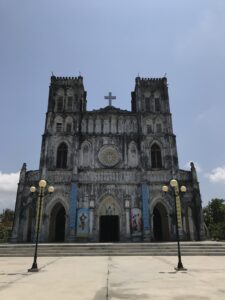
2) Mang Lang Church was built in 1892 by French missionary Father Joseph Lacassagne. Mang Lang is a local tree, and most of the interior and sculptures are made from it. Much of the gothic-style church is framed around the tale of Andrew of Phu Yen. When the King of Annam tried to stop the spread of Christianity in 1644, Andrew was captured. Andrew, who was probably 19 years old, refused to renounce his faith, and so was beheaded.
To the left of the church is a man-made cave, which comes with fake-but-convincing stalactites and stalagmites and its own chapel. Also look for the bullet holes to the left of the church entrance, a remnant of the war, and the mini museum to the rear, which includes US ammunition boxes.
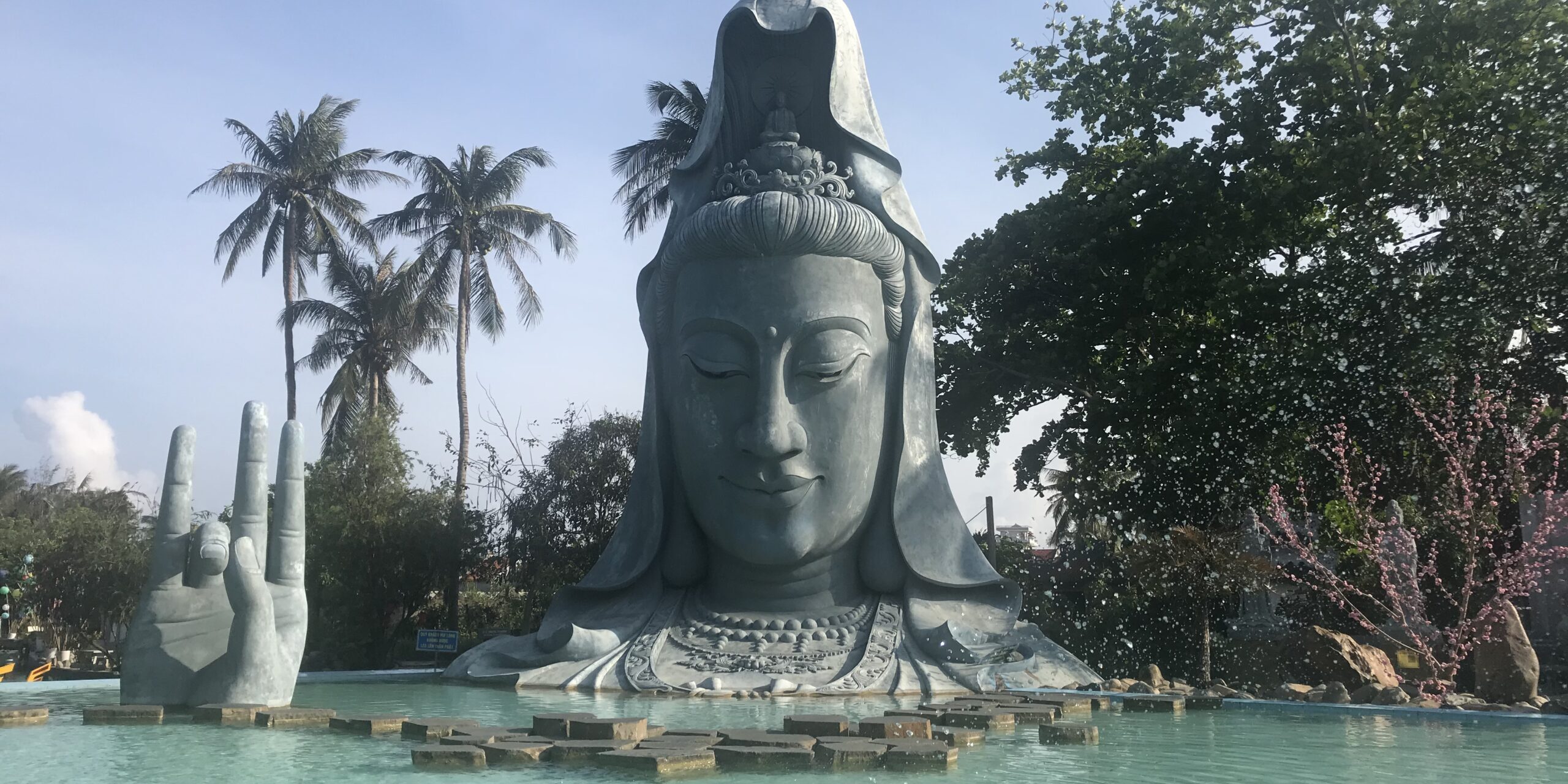
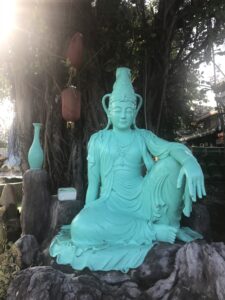
3) At first glance, Thanh Luong Pagoda appears to be made for Instagram. The bright colours and slightly kitsch feel make you wonder what you’ve just arrived at. The main temple is intriguing as it’s covered with white coral and coconut shells. Other features are just as striking, such as the turquoise Buddha seated under a tree and a giant version of the goddess Guan Yin, whose head and right hand appear above the water.
Although it started life 300 years ago as a modest pagoda, donations have allowed it to expand dramatically. Although it’s popular with Vietnamese (you suspect as much for the photo opportunities as for the religious aspect), very few tourists make it here.

4) Canh Phim Hoa Vang Tren Co Xanh
Yellow Flowers on the Green Grass was a 2015 Vietnamese movie. It’s a nostalgic tale from the 1980s that was shot mostly in Phu Yen. This recent brush with fame has catapulted Phu Yen onto locals’ must-see lists as the movie highlights the natural beauty of the area.
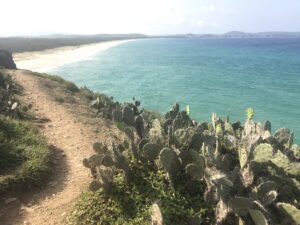
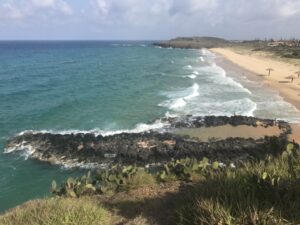
One of the main attractions is at the top of this cactus-laden cliff, which looks out across an expanse of ocean and towards completely undeveloped beaches. The owner of the site once planned to build a resort here, but for now there’s just a simple cafe and souvenir shop to accommodate the hundreds of locals who visit each day.
This former governor’s house is a little oasis of antiquity. Traditional wooden homes house an array of pottery made from shells (some used to store the spit from betel-nut chewers). The pottery comes from the Quang Duc line, and as the technology has now been lost, these pieces take on extra importance.
Outside, an immaculate garden is fringed by bonsai trees. Relics from bygone days, such as a bamboo fishing boat, wooden ploughs and ceramic pots, sit on display. Visitors sip local coffee and coconut-based snacks
Built by the governor of Phuoc Tuong Noi in the early 20th century, it’s worth stopping off on the way to Mang Lang Church.