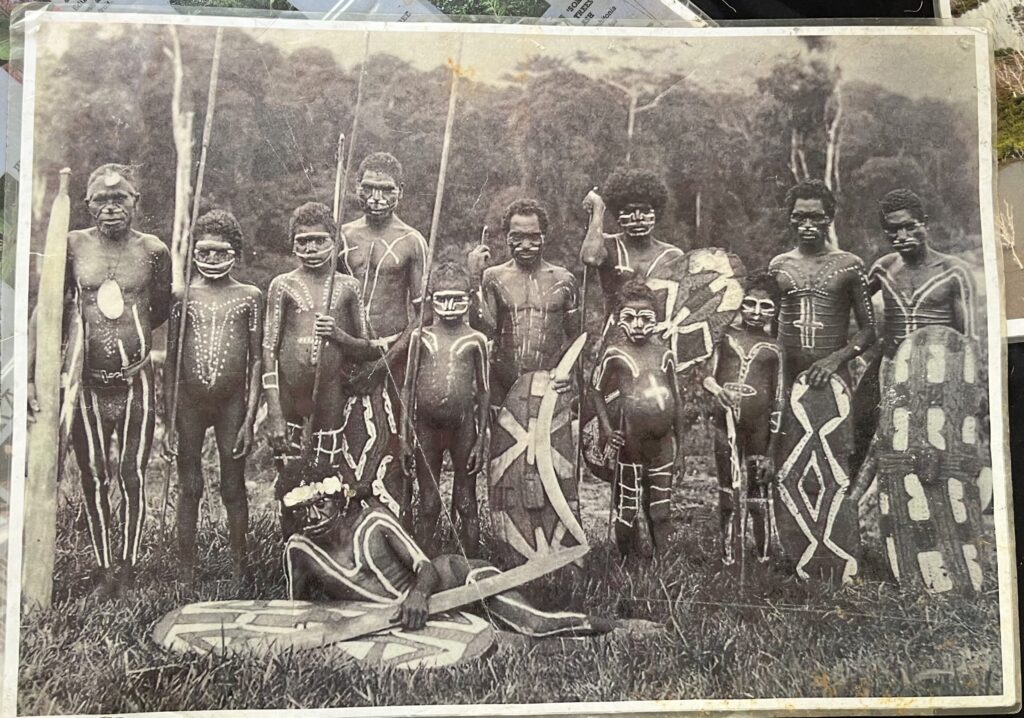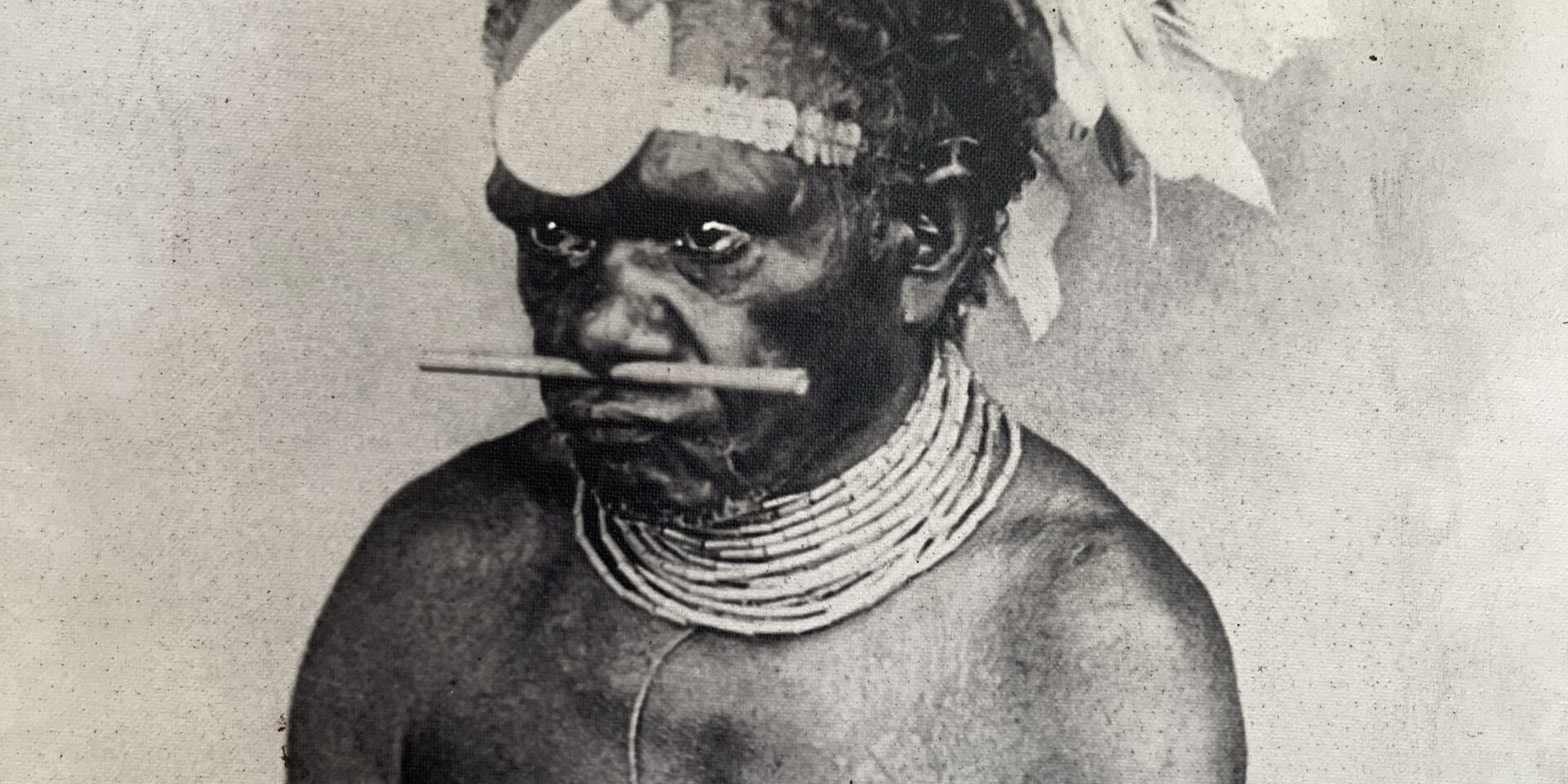
Vinnie is holding a photo of his aboriginal grandfather.
The black-and-white photo shows Jabulum wearing his late wife’s femur bone through his nose. On his head sits a proud plume of cockatoo feathers and on his forehead rests a band of white seashells. Around his neck there are several white loops. These, Vinnie explains, are the umbilical cords of the first-born children he had from later wives.
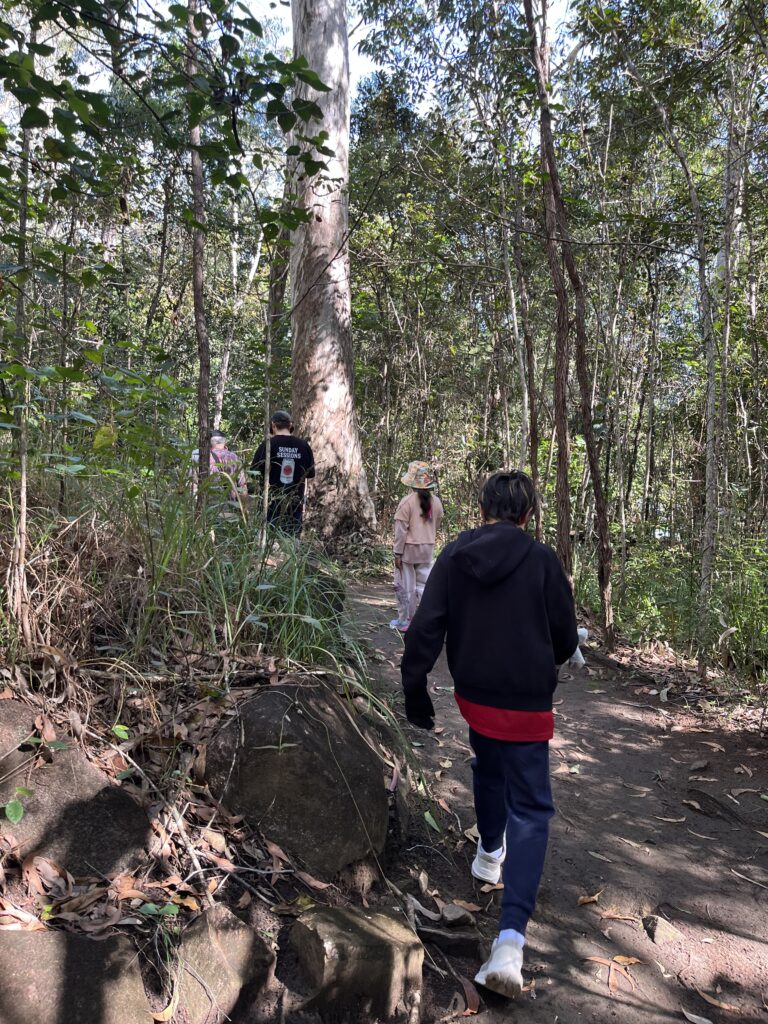
Vinnie finishes telling us about Jabulum and moves on to the weapon demonstration. He whips a boomerang through the air with an adroit flick. Next it’s time for a mini bush walk. I feel Jabulum would find it amusing that his grandson has been paid by these westerners to talk about his Country and wardrobe choices.
Captain James Cook is often said to have ‘discovered’ Australia in 1770 but in reality Jabulum and his people had been living there for around 50,000 years before HMS Endeavour set anchor. In 2002, the courts granted Native Title to the Mandingalbay Yidinji people for this area – ironically some of Capt Cook’s journal entries helped prove that there were settlements here long before he arrived. Since then, the Mandingalbay Yidinji have been developing tourism to help sustain their own livelihoods.
Rituals
Before we enter the Mandingalbay Indigenous Protected Area (IPA) near Cairns there needs to be a smoking ceremony. Vinnie and another family member, Mundi, make a fire from kindling and we walk through the smoke – a symbol to their ancestors that visitors are coming. You get a sense that this is for the cameras, but the actual meaning behind the ritual is very much alive.
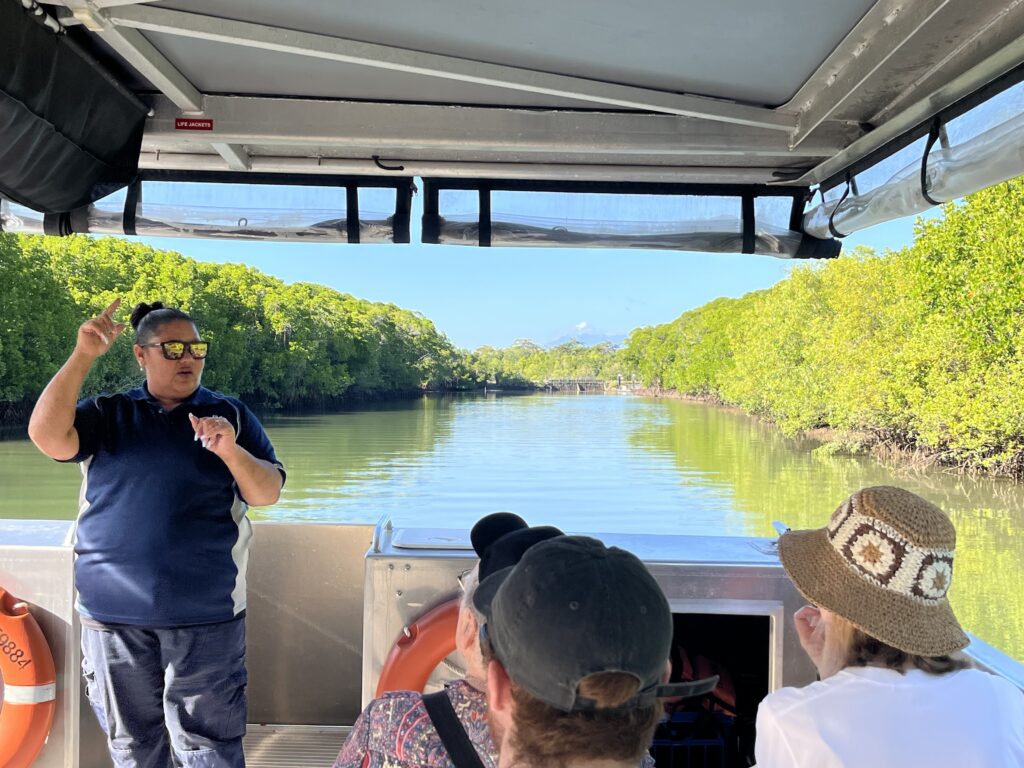
This is no ordinary tour. You can’t just turn up as the land isn’t open to the public. Vinnie and his family run the Mandingalbay Yidinji Aboriginal Corporation (MYAC) and see their role as preserving and protecting the natural habitat, while promoting sustainable tourism. To do this, they have big plans. After a short boat ride from Cairns, we approach a mangrove forest and see the first of these projects. An entrance area has been built, shaped like a stingray and with solar panels on top, and next to this are the bathrooms, with an inverted roof to catch rainwater (nothing is wasted here). In the future, there will be glamping sites, croc-spotting tours and more staff areas as employment opportunities grow. By 2050, the aim is that the whole area will be self-sufficient.
Although the IPA covers 940 hectares, only ten per cent is used and the family are acutely aware of the need to preserve their heritage, not exploit it. The area is staggeringly beautiful and so it’s not surprising that outsiders do try and get in (mainly to fish and hunt). Evidence of this comes from the gate we pass – the previous three have been knocked down by cars but new CCTV cameras in the trees seems to have done the trick.
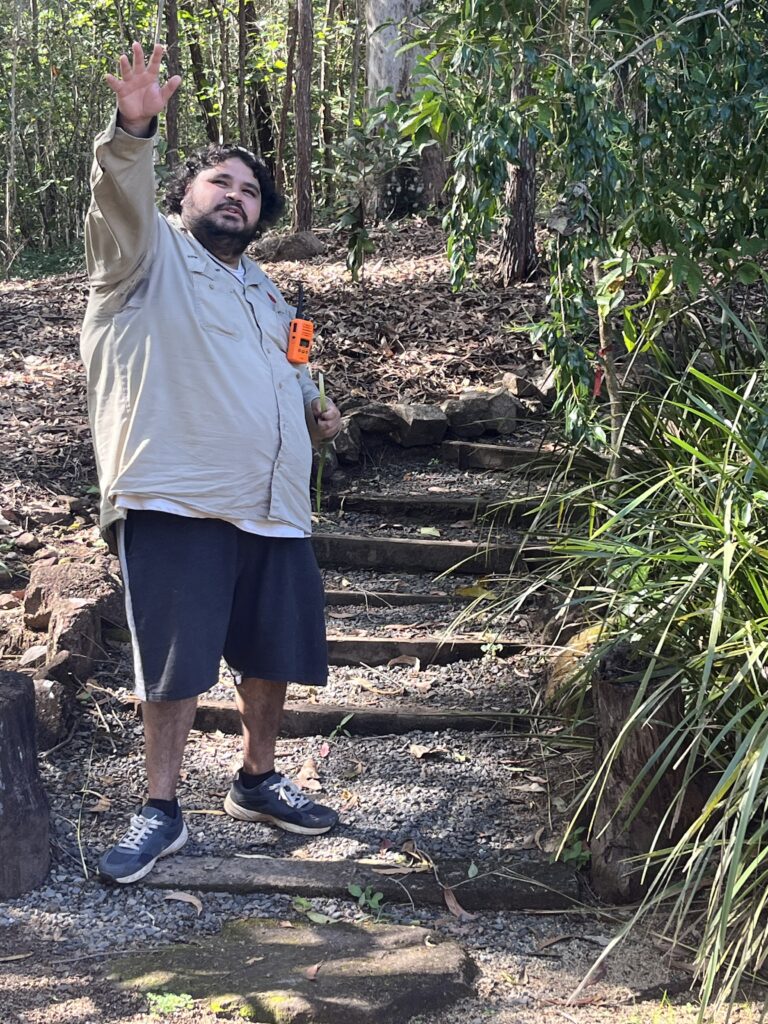
Once past the gate, we are soon on our tour of the nearby forest. Mundi, a large bearded chap with a dry sense of humour, takes over. He stops by the first sign and introduces us to a simpe shelter made from the paperbark tree.
‘OK, we are on a long tour today so there’s a difficult walk ahead before our next stop,’ he warns us.
Mundi takes four steps and triumphantly points to the next sign.
‘Here, we made it! This is the cocky apple tree. We use the roots and bark to make fish “high”. They’re stunned, floating around thinking “this is lovely” and come to the surface, where we take them.’
Development plans
Mundi makes his way past trees that tell him which way the water is (look for the bulbous area at the bottom and see where it leads), the mayi yakal nuts (edible and good for making bags), and the dukal dukal (the leaves are great for wrapping food in to cook).
Once we’re back from the walk, Vinnie explains how some hand-made weapons are used, including how to throw a boomerang properly. The tour is a short but fascinating insight into how it’s possible to live sustainably and sensibly when you respect the land. Of course, the aboriginal people have plenty of challenges remaining but projects like this, which have already won several tourism awards, are proof that they can continue to be self-sufficient. If all goes to plan, the next few years will see luxury eco-friendly accommodation built, zip-lines and climbing walls installed and a ‘culture and retail therapy precinct’ established. Vinnie’s grandfather would no doubt have smiled at the ambition and resourcefulness.
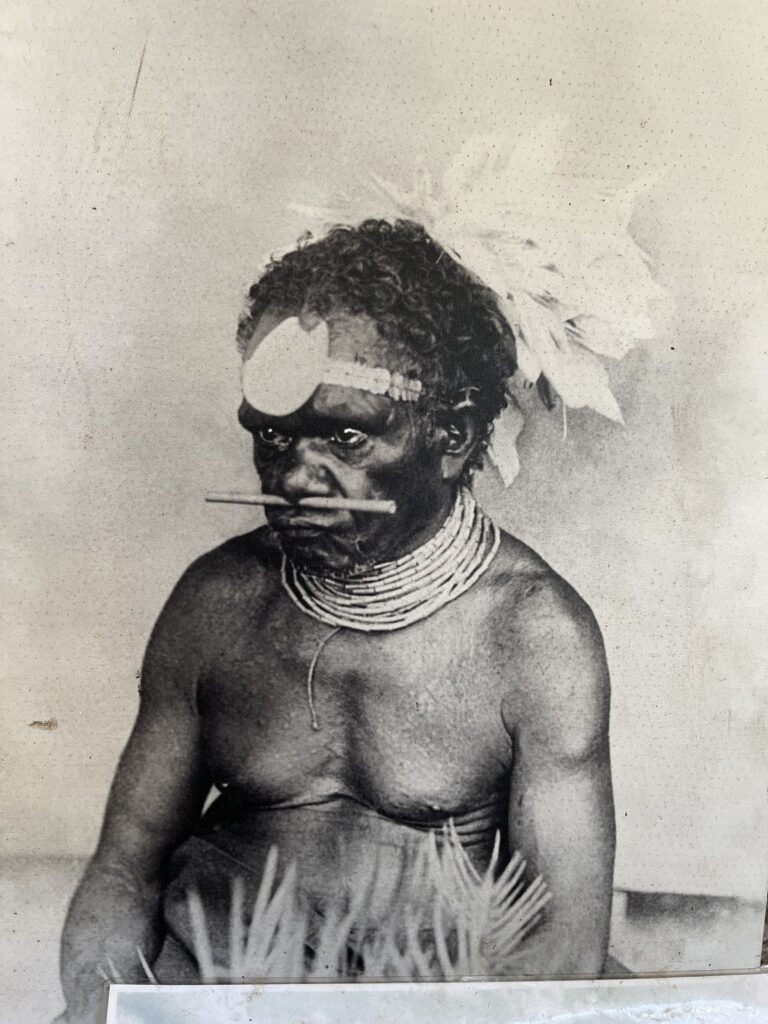
Jabulum, Vinnie’s grandfather